
Margin disappears fast when you overpay for inventory. That is why liquidation boxes for resale keep getting attention from online sellers, flea market vendors, discount stores, and growing retail operations. When the buy cost is low enough, you get room to price competitively, test new categories, and move product without tying up all your cash in one order.
For resellers, boxes are often the smartest entry point into liquidation. A full truckload can make sense for a large operation, but not every business needs that kind of volume on day one. A box gives you a lower-cost way to source merchandise, learn how a supplier packs inventory, and see how well certain categories perform in your market before you scale into pallets or larger wholesale buys.
Why liquidation boxes for resale work
The biggest reason is simple – flexibility. A reseller with a few hundred dollars to spend can buy inventory in a format that is easier to manage, easier to store, and faster to list. You do not need warehouse-level space to start processing a box of overstock, shelf pulls, or customer returns.
There is also a speed advantage. Smaller lots are easier to sort, test, photograph, and price. If you sell on eBay, Facebook Marketplace, Whatnot, Amazon, or through a local storefront, that matters. Faster processing means faster cash flow, and faster cash flow gives you more buying power for the next deal.
The other benefit is category testing. Maybe footwear performs well for you, but small electronics do not. Maybe mixed general merchandise sells quickly at your flea market, while apparel moves slower online because of sizing and return issues. Boxes let you test those realities without going too deep too early.
What is usually inside a liquidation box
That depends on the source, the retailer, and the condition grade. Most liquidation inventory falls into a few common buckets: overstock, shelf pulls, closeouts, customer returns, and surplus goods. Each one affects risk and resale potential.
Overstock is often the cleanest play. These are products that did not sell through normal retail channels but may still be new and retail-ready. Shelf pulls can also be strong, though packaging may show wear from being displayed in stores. Closeouts can offer excellent value when a retailer clears discontinued items or seasonal stock.
Customer returns are where the margins can get very attractive, but they require more work. Some items are in excellent condition. Others may be incomplete, used, or damaged. If you know how to inspect, test, bundle, and price imperfect inventory, returns can be profitable. If you want simple, fast listings with less labor, overstock and shelf pulls are often a better fit.
How to choose the right box for your resale model
The best liquidation buy is not always the cheapest one. It is the one that matches how you sell.
If you are an online marketplace seller, look for categories with clear product demand, recognizable brands, and manageable shipping costs. Shoes, accessories, home goods, and small electronics often fit that model well. If you run a discount store or bin store, mixed merchandise may give you better turn because shoppers are browsing for value rather than searching for one exact SKU.
Condition matters just as much as category. A seller with time to inspect and refurbish can handle returns. A seller who needs inventory that can hit the shelf quickly should stay closer to new overstock or shelf pulls. There is no universal best option. The right buy depends on your labor, storage, market, and risk tolerance.
Budget should guide your decision too. A lower-priced box may sound safer, but if the contents are highly inconsistent, your actual cost per sellable item can end up higher. Paying more for cleaner merchandise can produce better margins if your sell-through rate is stronger.
What to check before buying liquidation boxes for resale
A serious buyer should always look at the lot details closely. You want to know the merchandise type, estimated quantity, condition category, and whether the lot is mixed or category-specific. General descriptions are not enough when your profit depends on what is actually sellable.
Manifested lots can help because they offer more visibility into what is inside. Unmanifested lots can still be worthwhile, but they carry more uncertainty. That is not automatically a bad thing if the price is right and you are comfortable with mixed outcomes. It just means you need to buy with discipline.
You should also factor in freight or shipping costs early, not at the end. A good inventory deal can turn average once transportation is added. Smaller boxes usually give newer buyers a cleaner way to control this part of the equation.
Supplier consistency matters too. Resellers need a source that can keep inventory moving, answer questions, and offer buying formats that fit different stages of growth. That is a major reason many buyers start with boxes and then move into pallets once they know the source, the product flow, and the resale performance.
The real trade-off: lower entry cost vs. inventory risk
Let us keep this practical. Liquidation is not retail wholesale in perfect-case packs. You are buying opportunity, not certainty.
That is exactly why the pricing can be attractive. When branded goods, closeouts, shelf pulls, or returns are sold below original retail cost, the supplier is pricing in speed and volume. The reseller gets access to margin. In exchange, the reseller takes on some level of grading risk, assortment risk, and processing work.
That trade-off can absolutely be worth it. It just works best when you buy with a plan. Know where the inventory will be sold, how quickly you can process it, and what your minimum acceptable margin looks like before you place an order.
If you sell footwear, for example, branded shoes and sneakers can offer strong upside, especially when demand is consistent and sizing is marketable. But the condition grade still matters. A mixed box of footwear may contain winners, average movers, and a few slow pieces. The buy still works if your average sell price supports the full lot, not just the best pairs.
How profitable are liquidation boxes for resale?
Profit depends on four numbers: landed cost, sell-through rate, average selling price, and labor. Most new buyers focus only on purchase price, which is a mistake. A cheap box that takes forever to sort and only yields a handful of good listings is not always a better buy than a slightly more expensive box with cleaner, faster-moving items.
A stronger approach is to think in ranges. If a box gives you enough quality inventory to recover your landed cost quickly, the remaining units improve your margin. If the box is mixed, some items may be sold individually while others are bundled, discounted, or moved locally for speed. Resellers who understand multiple exit channels usually perform better because they are not relying on one perfect outcome.
This is where a direct liquidation source can make a big difference. Access to box, pallet, and larger lot options allows you to buy according to budget and scale based on results. Pallet Liquidation Wholesale Online is built around that reseller model, giving buyers flexible inventory formats instead of forcing every customer into oversized bulk purchases from the start.
When to move from boxes to pallets
Boxes make sense when you are testing categories, preserving cash, or learning a supplier. Pallets make sense when your sell-through is consistent and your operation can handle more volume.
The switch usually happens when your biggest problem is no longer product uncertainty but product shortage. If you already know what sells, how fast it sells, and how you will process it, pallets can lower your unit cost and support better scaling. Until then, boxes are often the smarter move because they let you stay active without
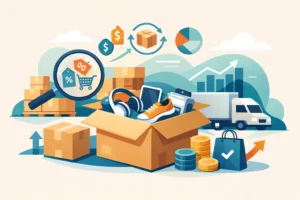
.
That is especially true for smaller resellers balancing inventory with storage space, listing time, and cash flow. You do not need the biggest buy to make a strong buy. You need inventory that fits your business right now.
A smart way to buy your first few lots
Start narrow. Buy the category you understand best, whether that is footwear, apparel, home goods, tools, or mixed general merchandise. Track what arrives, what is sellable, what needs work, and what actually sells. Those numbers will tell you more than guesswork ever will.
Then buy again with better judgment. That is how resale businesses grow – not by chasing random cheap lots, but by improving purchase decisions over time. The best liquidation buyers are not just bargain hunters. They are disciplined operators who know their market, protect their cash, and move quickly when the numbers make sense.
If you treat liquidation boxes as a business tool instead of a gamble, they can become one of the most practical ways to build inventory, protect margin, and create room to grow.
