
Bulk merchandise purchasing is defined as buying large quantities of products in a single transaction to reduce per-unit cost and improve inventory efficiency. The industry standard term is “wholesale purchasing,” and both phrases describe the same core practice. Businesses using bulk purchasing strategies save 15–30% on inventory costs compared to buying items individually. That savings range is significant enough to shift a thin-margin resale operation into consistent profitability. This guide covers the financial mechanics, strategic risks, supplier relationships, and operational practices that make wholesale purchasing work for small business owners and e-commerce entrepreneurs.
What is bulk merchandise purchasing and how does it save money?
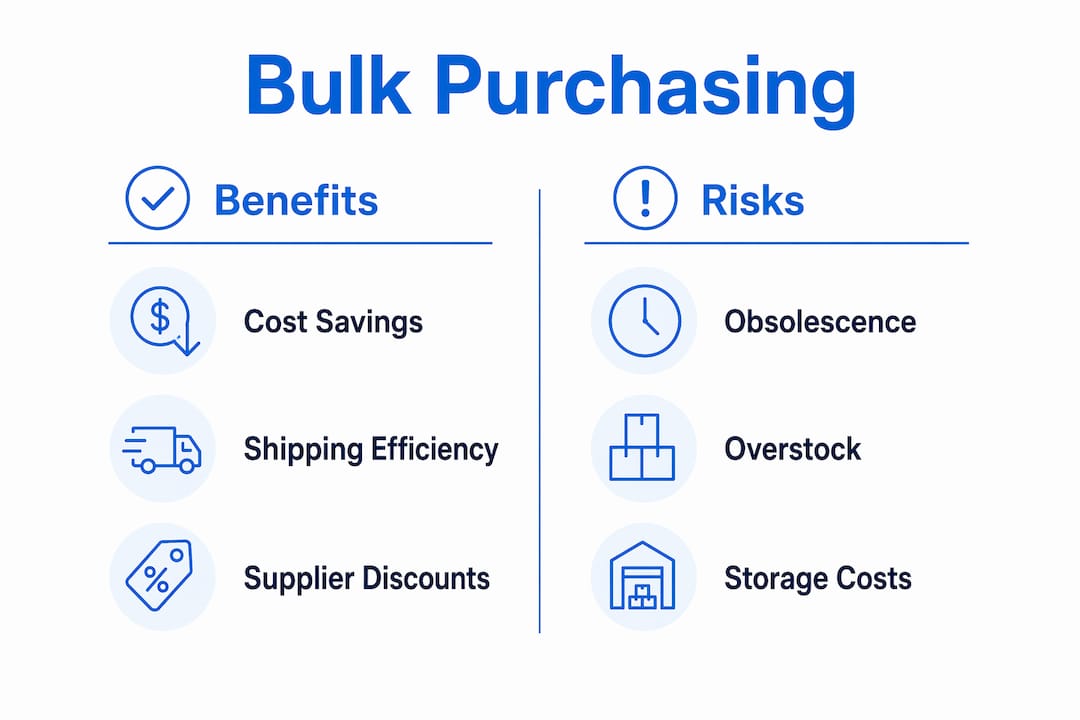
Bulk merchandise purchasing delivers savings through one mechanism: lower per-unit cost at higher volume. When you buy 500 units instead of 50, the supplier’s cost per transaction drops, and that discount passes to you. Unit price discounts range from 5% to 60% depending on the product category. The highest savings appear in cleaning supplies, health products, and personal care items.
Volume-based pricing is a foundational element of B2B supplier-retailer relationships. Suppliers reward consistent, high-volume buyers with better pricing because it reduces their own sales and fulfillment overhead. This is why a reseller buying truckload quantities pays a fraction of what a single-unit buyer pays for the same product.

Shipping consolidation adds another layer of savings. One freight shipment covering 1,000 units costs far less per item than 20 separate small-parcel deliveries. Fewer purchase orders also reduce administrative time and procurement cycle costs.
Pro Tip: Always calculate landed cost before committing to a bulk order. Landed cost includes the product price, freight shipping, customs fees, and storage. A deal that looks profitable at the invoice price can turn negative once you add those fees.
The categories with the strongest bulk savings for resellers include electronics, apparel, footwear, and general merchandise. Liquidation pallets sourced from major U.S. retailers often carry deep discounts because the original retailer needs to clear overstock fast. Palletliquidationwholesaleonlineinusa specializes in exactly this type of inventory, giving resellers direct access to closeout merchandise sourcing at truckload pricing.
What are the strategic risks of buying in bulk?
Bulk purchasing carries real risks that offset savings when left unmanaged. Storage costs, overstock risk, and product obsolescence can erase the per-unit discount if products do not turn over. A reseller who buys 2,000 units of a seasonal item in the wrong month may sit on dead inventory for quarters.
The three primary risks every bulk buyer must plan for are:
- Storage capacity. Bulk inventory requires physical space. Warehouse rent, shelving, and handling costs are real expenses that must factor into your total cost calculation.
- Cash flow strain. Bulk orders require upfront capital. Tying up $10,000 in a single purchase limits your ability to respond to other buying opportunities or cover operating expenses.
- Demand forecasting failure. Buying more than your market can absorb leads to markdowns, storage fees, and eventual write-offs. Accurate sales velocity data is the only protection against this.
Obsolescence is a specific risk in electronics and fashion categories. A product that sells well today may face a newer model or trend shift within 90 days. Buying six months of supply in those categories requires confidence in your sell-through rate.
Pro Tip: Apply the 3x rule before every purchase: your wholesale purchase price should not exceed one-third of the estimated resale value. This buffer accounts for fees, unsellable units, and margin. If a pallet costs $300 and you expect $600 in resale revenue, the math does not work. You need $900 in expected resale to justify that $300 buy.
Understanding overstock versus surplus inventory also helps you assess risk before committing capital. Overstock is excess supply of a current product. Surplus often includes discontinued or end-of-life items that carry higher obsolescence risk.
How do you build supplier relationships that support bulk buying?
Supplier vetting is more important than price alone. Experienced resellers prioritize return policies, trade history, and payment terms over the lowest quoted price. A supplier who offers Net-30 terms and accepts returns on damaged goods is worth more than one who offers a 5% lower price with no recourse.
The key steps for evaluating a wholesale supplier include:
- Request SKU-level manifests. A reliable supplier provides a full manifest listing every product, quantity, and condition grade. Vague lot descriptions are red flags. Condition grades typically run A-grade (new), B-grade (shelf pulls), and C-grade (customer returns).
- Verify payment terms. Net-30 terms improve your cash flow. Escrow options protect you on first-time transactions with new suppliers.
- Check damage and resolution policies. Reliable suppliers have clear policies for damaged goods and shipping delays. Ask specifically how they handle freight damage claims before you place an order.
- Review trade history. Ask for references from other resellers. A supplier with a track record of consistent, accurate shipments is worth a premium.
Long-term supplier relationships pay dividends beyond price. Building supplier relationships improves access to exclusive stock, better credit terms, and early notification of new liquidation lots. Palletliquidationwholesaleonlineinusa has operated for nearly a decade and maintains direct sourcing relationships with top U.S. retailers, which translates to consistent inventory quality for buyers.
What operational practices maximize profit after a bulk purchase?
Receiving a bulk shipment is the beginning of the work, not the end. How you store, rotate, and track that inventory determines whether the purchase generates profit or loss.
Organizing storage to reduce damage and handling costs
Place fast-moving items near your packing or shipping area. Slow-moving inventory goes to the back. This simple layout reduces handling time and the chance of damage from repeated movement. Label every shelf and bin clearly so you can locate any SKU in under 60 seconds.
Implementing stock rotation
First-in, first-out (FIFO) rotation is the standard for most merchandise categories. New stock goes behind existing stock. This prevents older units from sitting untouched while newer arrivals get picked first. For seasonal goods, FIFO is especially critical because older units lose value faster.
Tracking inventory and sales velocity
Sales velocity is the rate at which a product sells per week or month. Tracking it tells you when to reorder and how much to buy. A product selling 50 units per week with a 4-week lead time requires 200 units in reserve at minimum. Without this data, you either overstock or run out.
Inventory management software like QuickBooks Commerce or Cin7 gives small business owners real-time visibility into stock levels and reorder points. These tools connect to e-commerce platforms and update counts automatically as sales occur.
Pro Tip: Review liquidation inventory tips to understand how experienced resellers price and rotate bulk lots for maximum sell-through.
Organizing storage and using stock rotation directly minimize the risk of loss and obsolete inventory in bulk purchases. That combination of physical organization and data tracking is what separates profitable bulk buyers from those who break even.
Key Takeaways
Bulk merchandise purchasing saves money only when cost savings, storage capacity, supplier reliability, and inventory management work together as a system.
| Point | Details |
|---|---|
| Cost savings range | Bulk purchasing saves 15–30% on inventory costs versus individual buying. |
| Apply the 3x rule | Your purchase price must not exceed one-third of expected resale value to protect margin. |
| Demand SKU manifests | Always request full condition-graded manifests before committing to any bulk lot. |
| Vet suppliers beyond price | Prioritize return policies, Net-30 terms, and damage resolution over the lowest quote. |
| Track sales velocity | Use inventory software to monitor sell-through rates and set accurate reorder points. |
What I’ve learned from watching bulk buyers succeed and fail
Most resellers who struggle with bulk purchasing make the same mistake: they treat it as a discount tactic rather than a business system. They see a low price per unit and buy without checking storage capacity, demand data, or supplier reliability. The savings evaporate in storage fees and markdowns.
The 3x rule sounds simple, but I’ve seen experienced buyers abandon it under pressure. A supplier offers a “limited time” deal, the buyer skips the math, and the lot sits for months. The rule exists precisely because urgency is a sales tactic. Profit is king, and no deal is worth breaking the formula.
The resellers I’ve watched build real businesses treat supplier relationships like partnerships. They pay on time, communicate clearly, and give feedback on product quality. In return, they get early access to new lots, better terms, and priority when supply is tight. That relationship advantage is not visible in a price sheet, but it shows up in the bottom line every quarter.
Scaling bulk purchasing sustainably means buying within your operational capacity. A reseller with 500 square feet of storage should not buy truckload quantities until the logistics are in place. Growth in bulk buying is a function of systems, not just capital.
— elianne
How Palletliquidationwholesaleonlineinusa supports bulk buyers
Palletliquidationwholesaleonlineinusa sources liquidation pallets directly from top U.S. retailers, giving small business owners and e-commerce resellers access to overstock and closeout goods at truckload pricing. The platform carries electronics, apparel, and general merchandise with condition-graded lots and transparent manifests.
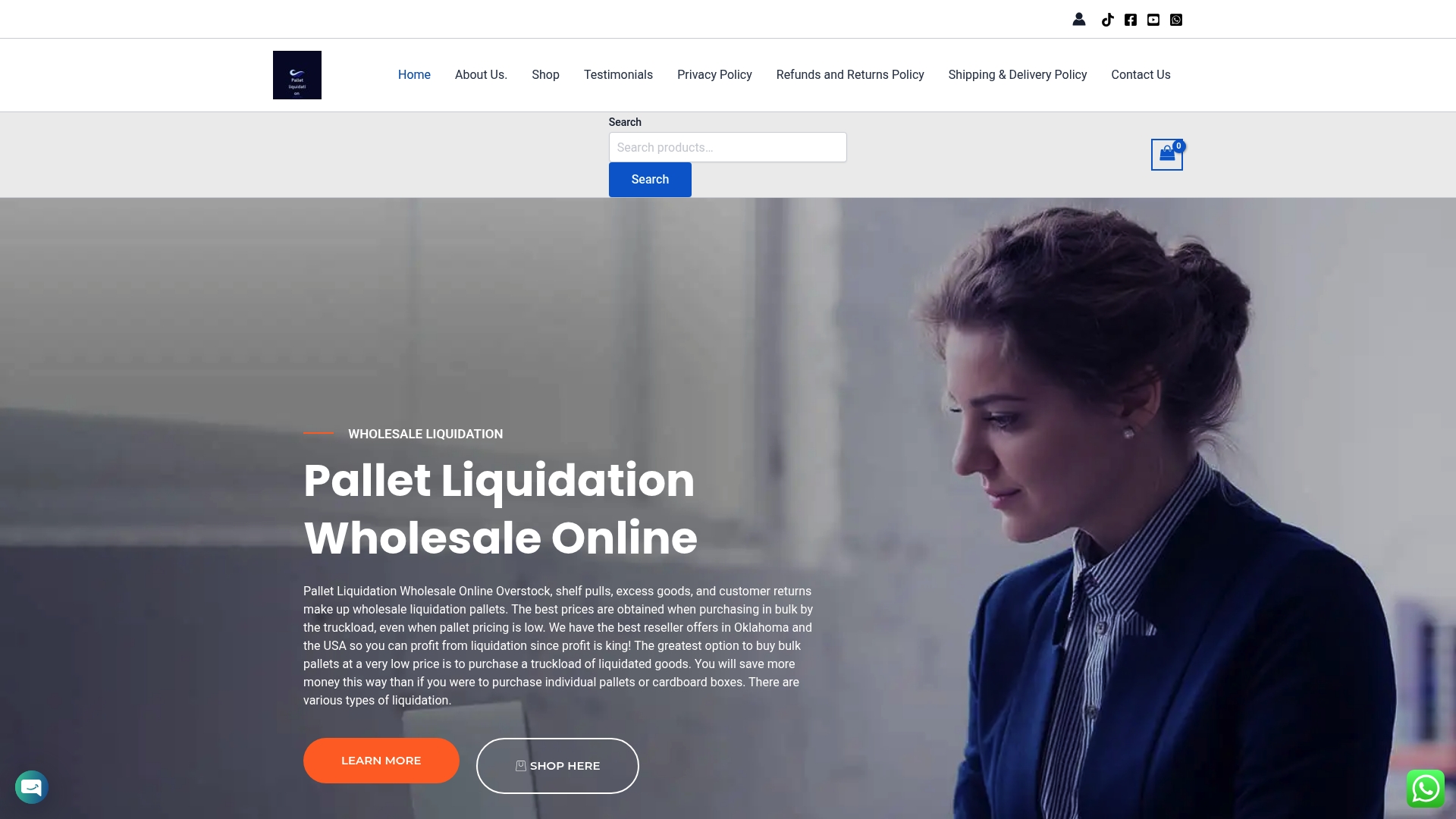
With nearly a decade of experience, Palletliquidationwholesaleonlineinusa offers flexible payment options, direct supplier access, and first-class customer support for every order. Resellers can order bulk liquidation inventory directly through the website and choose from a range of pallet sizes and categories. For buyers ready to move into truckload liquidation merchandise, the platform provides the pricing and volume options that make the numbers work.
FAQ
What is bulk merchandise purchasing?
Bulk merchandise purchasing is the practice of buying large quantities of products in a single transaction to reduce per-unit cost. The industry standard term is wholesale purchasing, and it is a foundational practice in retail and resale inventory management.
How much can you save by buying in bulk?
Businesses using bulk purchasing strategies save an average of 15–30% on inventory costs compared to buying items individually. Discounts vary by category, ranging from 5% to 60%, with the highest savings in cleaning, health, and personal care products.
What is the 3x rule in wholesale buying?
The 3x rule states that your wholesale purchase price should not exceed one-third of the estimated resale value. This buffer covers fees, unsellable units, and margin to keep the purchase profitable.
What should you check before buying a bulk lot?
Request a full SKU-level manifest with condition grades before committing to any bulk purchase. Vague descriptions without product-level detail are a red flag for unreliable suppliers.
How do you manage inventory after a bulk purchase?
Use first-in, first-out stock rotation and track sales velocity with inventory management software. These two practices prevent obsolescence and keep reorder planning accurate.
Recommended
- Truckload Liquidation Merchandise Explained – Pallets USA
- Closeout Merchandise Sourcing That Sells – Liquidation USA
- Buying Liquidation Merchandise Pallets – Pallets in USA
- Box Lots Versus Pallet Lots – Pallet Liquidation USA
