
A pallet shows up, the wrap comes off, and the whole deal comes down to one question – is there enough margin in the mix to make it worth it? That is exactly why customer returns pallets for resale keep getting attention from resellers, discount stores, online sellers, and side-hustle buyers who want branded inventory below retail.
The appeal is simple. Returns inventory can cost far less than standard wholesale, and that price gap creates room for profit. But returns are not the same as clean case-pack overstock. If you buy them like they are identical, you can burn cash fast. If you buy them with the right expectations, they can become one of the most flexible inventory sources in your business.
What customer returns pallets for resale actually are
Customer returns pallets for resale are bulk lots made up of merchandise that customers previously bought and then sent back to a retailer. Those items can come back for a lot of reasons. Sometimes the buyer changed their mind. Sometimes the packaging was damaged. Sometimes the product was opened, lightly used, missing a part, or simply unwanted.
That mixed condition is what creates the discount. Retailers do not want to inspect, repackage, relist, and individually resell every single returned item. Moving that merchandise out in bulk is faster. For resellers, that creates an opening to buy low and sell across multiple channels.
This is also why returns pallets are never a one-size-fits-all inventory play. One pallet might be packed with easy wins and quick flips. Another might need testing, sorting, bundling, or parts recovery to get the most value out of it. The opportunity is real, but so is the work.
Why resellers keep buying customer returns pallets for resale
The main reason is margin. When inventory is acquired at a deep enough discount, you do not need every item to be perfect to make the pallet profitable. A few strong resale items can carry a large share of the load, especially in categories with steady demand such as shoes, small electronics, home goods, tools, toys, and apparel.
There is also a speed advantage. A single pallet can give a small seller dozens or hundreds of SKUs at once. That matters if you sell on eBay, at a flea market, through Facebook Marketplace, in a discount store, or through live selling. Instead of hunting for one-off deals, you can source in bulk and keep inventory moving.
Another reason is product variety. Mixed returns can help sellers test categories without committing to a full truckload or a narrow single-SKU buy. For newer buyers, that flexibility matters. For experienced buyers, it creates options for bundling, lotting, cross-listing, and seasonal selling.
What is usually inside a returns pallet
This depends on the source, category, and lot makeup. Some pallets are general merchandise with a little bit of everything. Others are category-specific, such as footwear, electronics, tools, apparel, toys, or home products.
Condition is where the real variation shows up. In the same pallet, you may find new items in open boxes, products with damaged packaging, shelf-pull style goods, items that need cleaning, partially complete units, and some products that are best sold for parts or liquidation bundles. That is normal.
For that reason, smart buyers do not value every item at full retail. They look at probable resale condition, likely sell-through speed, testing requirements, and how much labor the pallet will take after delivery. A pallet with strong brands and high-demand categories can still be a very good buy, even if some percentage of the units are not resale-ready on day one.
The biggest mistake buyers make
They confuse low cost with easy profit.
Cheap inventory only helps if you can process it, price it correctly, and move it through the right channel. A pallet loaded with customer returns can be excellent for a hands-on reseller who tests items, cleans products, combines accessories, and lists across several marketplaces. The same pallet can be a bad fit for someone who wants perfect retail-ready stock with no prep.
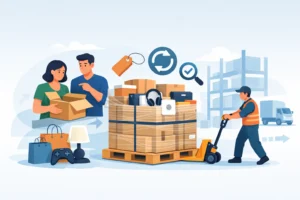
The other mistake is buying too large too early. New liquidation buyers often see the lowest per-unit cost and jump into bigger loads before they understand freight, condition risk, and local demand. That is usually backwards. It makes more sense to start with manageable volume, learn what your market responds to, and then scale your lot size.
How to evaluate a pallet before you buy
Start with the category. Some categories are easier to resell than others, and some have lower return headaches. Footwear, apparel, and many hard goods can offer better recovery than products with heavy testing requirements. If you already know how to sell a category, that gives you an edge immediately.
Next, look at the manifest if one is available, but do not treat it like a guarantee. A manifest is a guide, not a promise of exact resale value. Use it to estimate potential, then discount your expectations. Build in room for missing pieces, condition issues, and slower-selling items.
You also need to think about your channel. A pallet that works for a local discount bin store may not be ideal for Amazon. Marketplace sellers may do well with mixed lots and open-box items. Store owners may prefer pallets with broad consumer appeal and low testing time. The right pallet is not just about the merchandise. It is about how you plan to sell it.
Freight matters too. A good pallet price can turn average after shipping, especially for buyers who are far from the warehouse. Always evaluate landed cost, not just purchase price.
Returns pallets vs overstock pallets
This comparison matters because buyers often lump liquidation inventory into one bucket when it is not all the same.
Overstock pallets generally offer more consistent condition. The products are often new and easier to process, but the buy cost is usually higher. Customer returns pallets for resale usually come with deeper discounts, but they also come with more condition variance and more post-purchase labor.
That trade-off is the whole game. If your business model is built around fast listing, local flipping, discount retail, or refurb-ready categories, returns can be a strong fit. If your operation depends on clean, uniform inventory with fewer surprises, overstock may be the better lane even at a higher upfront price.
Who should buy customer returns pallets for resale
They make the most sense for buyers who understand that liquidation is a margin business, not a perfection business. If you know how to sort inventory, identify value fast, and sell across more than one channel, returns pallets can give you strong upside.
They are also a good fit for buyers with limited starting capital who still want volume. A pallet can give a small reseller enough inventory to create multiple revenue streams from one purchase. Some items can be sold individually. Some can be bundled. Some can be cleared locally for quick cash flow.
That said, not every buyer should start here. If you need exact counts, factory-sealed units, or highly predictable condition, returns inventory may feel too uneven. There is profit in the inconsistency, but only if your workflow can handle it.
Buying smarter from a liquidation source
The best results usually come from buying from a supplier that clearly explains lot types, supports different purchase sizes, and gives buyers a straightforward path from checkout to freight coordination. You want visibility into what kind of inventory you are buying, realistic expectations on condition, and enough lot variety to match your budget.
That is where a direct liquidation supplier can make a difference. Instead of chasing random secondary sellers, resellers can source boxes, pallets, or truckloads based on their capital level and sales model. Pallet Liquidation Wholesale Online works in that lane, helping buyers source discounted merchandise built for resale without forcing them into one rigid buying format.
The key is to buy with a plan. Know your category. Know your outlet. Know your labor capacity after the pallet arrives. Returns inventory rewards buyers who think in recovery rate, not just sticker price.
How to make more from a returns pallet after delivery
Once the pallet lands, speed matters. The faster you sort and identify winners, the faster you turn inventory back into cash. Separate clean resale-ready items from products that need testing, and separate both from items better suited for bundles, parts, or clearance.
Presentation also changes your recovery rate. A cleaned product with accurate photos and an honest condition note will usually outperform a rushed listing. For local sellers, grouping related lower-value items can move inventory faster than trying to maximize every single unit.
This is where many profitable buyers win. They do not expect every item to be a home run. They build profit by recovering value in different ways across the entire pallet.
If you are looking at customer returns pallets for resale, think less about finding a perfect load and more about finding the right load for your business model. The buyers who stay in this game are the ones who price risk correctly, move fast, and keep buying where the numbers make sense.
