
One good pallet can change your week. If you sell online, run a discount store, or move inventory at flea markets, shelf pulls pallets wholesale can be one of the smartest ways to buy branded merchandise below retail without stepping into the heavier risk that often comes with untested customer returns.
Shelf pulls sit in a profitable middle ground. These are typically items removed from retail shelves because of packaging updates, seasonal resets, overstock shifts, discontinued SKUs, or store-level merchandising changes. In many cases, the product itself is still sellable. That matters to resellers who need inventory that turns fast, looks familiar to buyers, and leaves enough margin after shipping, marketplace fees, and labor.
Why shelf pulls pallets wholesale attract serious buyers
The biggest reason is simple – shelf pulls often offer stronger resale potential than mixed return loads, while still coming in well below traditional wholesale pricing. For a reseller, that creates room to price competitively and still protect profit.
Branded merchandise is a major part of the appeal. Retailers rotate stock quickly, and products that no longer fit a current shelf plan still carry market value. That gives buyers access to recognizable goods without paying standard distributor pricing. If you sell footwear, apparel, small home goods, general merchandise, or accessories, that gap between buy cost and resale value is where the opportunity sits.
There is also a speed advantage. Buyers looking at shelf pull pallets wholesale are usually trying to restock quickly, test a category, or add variety without committing to full truckload volume. A pallet format works because it is scalable. You can start with one pallet, move product, and then increase volume once you know your sales channels and average recovery rate.
What you are really buying with shelf pulls
A lot of new buyers hear the term and assume shelf pulls means brand-new retail-ready inventory across the board. That is not always the case. Shelf pulls can include clean merchandise in near-new condition, but they can also include open packaging, missing tags, minor shelf wear, sticker residue, box damage, or incomplete presentation.
That does not make the inventory bad. It just means the value is in understanding condition against channel. A pair of branded shoes with a damaged box may do fine on eBay or in a discount storefront. The same item may be less attractive if your business depends on gift-quality presentation. The product can still move well, but the right market matters.
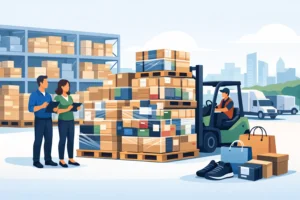
This is where experienced buyers make better decisions than hopeful buyers. They do not ask whether a pallet is perfect. They ask whether the contents match their resale model.
Shelf pulls vs customer returns
This distinction matters because it affects risk, processing time, and recovery rate. Shelf pulls are usually less handled than customer returns. They may have been on display, moved around in a stockroom, or pulled during a reset, but they often have a better chance of being unused.
Customer returns can produce big wins, especially in higher-value categories, but they usually require more inspection, more testing, and more sorting. Shelf pulls tend to be more predictable. That predictability is worth money if your team is small or your business depends on listing and selling quickly.
Shelf pulls vs overstock
Overstock is often the cleanest category because it may never have reached the sales floor. Shelf pulls can still be excellent inventory, but they are one step closer to retail handling. That means more variation in packaging and presentation. The upside is that shelf pulls can be priced aggressively enough to offset that difference.
How to buy shelf pulls pallets wholesale without guessing
The buyers who do best with liquidation inventory usually focus on four things: source, category, manifest detail, and total landed cost. Miss one of those, and the pallet may still sell, but your margin gets tighter fast.
Start with the source. You want a supplier that clearly identifies the inventory type, explains condition honestly, and offers lot sizes that fit your budget. Direct liquidation sourcing matters because every extra layer between the inventory and the buyer usually adds markup and reduces clarity.
Then look at category fit. Shelf pulls are not one-size-fits-all. If your best sales come from footwear, it makes more sense to buy in that lane than to chase random mixed merchandise because the headline discount looks attractive. Buyers who know their customer usually outperform buyers who chase broad variety.
Manifest detail is the next filter. Some pallets are sold with detailed manifests, and some are more general mixed lots. A detailed manifest gives you a better shot at forecasting resale value. A mixed lot may offer stronger surprise upside, but it also raises uncertainty. Neither format is automatically better. It depends on your risk tolerance and how well you know the category.
Finally, calculate landed cost, not just pallet price. Freight, unloading, prep time, missing pieces, relabeling, repackaging, and selling fees all affect your real margin. A pallet that looks cheap can become expensive if it takes too much labor to process.
Best resale channels for shelf pulls pallets wholesale
Shelf pulls perform well across multiple channels because they often include recognizable retail merchandise with broad consumer demand. But each channel rewards different inventory traits.
Online marketplaces work well for branded items, especially when shoppers already know what they are looking for. If packaging has flaws, strong photos and accurate condition notes become part of the sales process. Local selling channels can also be effective because buyers are often more flexible on box condition when they can inspect the item in person.
Discount stores and flea market booths benefit from shelf pulls because customers expect value. Presentation matters less than price and brand familiarity. For footwear and sneakers, shelf pulls can be especially attractive if the product is clean and wearable, even when outer packaging is not perfect.
If you operate across multiple channels, shelf pulls give you flexibility. Better units can go to premium platforms, while imperfect packaging or lower-demand items can move through local or discount channels. That ability to split inventory by condition is one reason pallet buyers can outperform single-channel sellers.
Common mistakes that cut into profit
The first mistake is buying on excitement instead of math. Branded inventory at a deep discount sounds great, but if you cannot estimate average resale value with reasonable accuracy, you are gambling more than sourcing.
The second mistake is ignoring condition language. Terms like shelf pulls, salvage, returns, and overstock are not interchangeable. Buyers who lump them together often end up with the wrong expectations and slower turnover.
The third mistake is buying too much too soon. A truckload can lower per-unit cost, but only if your business has the capital, space, labor, and sales volume to handle it. For many resellers, a pallet or several pallets is the better growth move because it keeps cash flow flexible.
The fourth mistake is choosing inventory that does not match your buyer. A mixed pallet full of unfamiliar goods may be cheap, but cheap inventory is not the same as profitable inventory. Recognizable categories with steady demand usually win over novelty buys.
What to look for in a wholesale supplier
You need more than low prices. You need accurate inventory descriptions, responsive communication, and options that fit how you buy. A supplier that offers boxes, pallets, and truckloads gives you room to scale instead of forcing a one-size purchase.
Support also matters more than many buyers admit. Questions about condition, manifests, shipping timelines, and fulfillment should not feel like a fight. Fast answers help buyers move faster, and speed matters when you are restocking or trying to catch a sales window.
This is why many resellers prefer working with a focused liquidation source instead of bouncing between random auction lots. When inventory is presented clearly and buying is straightforward, you can spend less time chasing information and more time selling.
Is shelf pulls pallets wholesale right for your business?
If your goal is to buy below retail, access branded goods, and keep inventory moving, the answer is often yes. Shelf pulls make sense for resellers who want a better balance between opportunity and risk. They are not perfect inventory, and they should not be treated like standard distributor stock. But for the right buyer, that is exactly where the margin comes from.
Businesses that know how to sort, price, and channel product correctly can do very well with this inventory type. Newer buyers can also start here because shelf pulls are often easier to understand and process than heavy return loads. The key is buying with a plan, not just a budget.
Pallet Liquidation Wholesale Online works in that lane because it gives resellers access to liquidation inventory in formats that match different business stages, from smaller pallet purchases to larger volume buying. That flexibility matters when you are trying to grow without tying up cash in the wrong load.
The smartest inventory is not always the cleanest or the cheapest. It is the inventory you can buy with confidence, process without delay, and resell for a margin that makes the next order even easier.
