
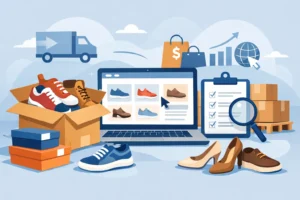
One good shoe lot can change your month. A mixed pallet with recognizable brands, clean pairs, and enough size variety can turn into fast cash across eBay, Facebook Marketplace, Whatnot, and your own store. That is why footwear liquidation for online resellers keeps getting more attention from sellers who want inventory that moves without paying full wholesale.
Shoes sit in a sweet spot for resale. Buyers already know what they want, they search by brand and size, and strong categories like sneakers, work boots, athletic shoes, kids’ footwear, and casual styles can sell year-round. The upside is real, but so is the risk. If you buy the wrong lot, your money gets tied up in damaged pairs, missing sizes, weak brands, or products that cost too much to ship for the margin left on the table.
Why footwear liquidation works for online resellers
The biggest reason is simple: price. Liquidation inventory gives resellers access to overstock, shelf pulls, closeouts, and customer returns at a fraction of original retail cost. That lower buy-in creates room for profit even when marketplaces take fees, shipping costs climb, and some pairs need extra time to sell.
Footwear also gives you multiple resale paths. A clean branded sneaker can be listed individually for stronger margin. A lower-value pair can be bundled. Kids’ shoes can move in lots. Work shoes and practical everyday styles often sell on need, not hype, which helps keep sales steady when trend-driven categories slow down.
The other advantage is speed. Online resellers need inventory they can photograph, list, and move without a long education cycle. Most buyers do not need a detailed explanation to understand a pair of branded running shoes or casual sneakers. They know the brand, they know the style category, and they know their size. That shortens the path from sourcing to sale.
What to look for in footwear liquidation for online resellers
Not every footwear lot is built the same. The grade matters, the source matters, and the manifest matters when one is provided. If you are buying for online resale, you need to think beyond the headline discount.
Start with condition. Overstock and closeout footwear usually offer the cleanest path to resale because items are often new and easier to list at competitive prices. Shelf pulls can still be strong, but you may see box damage, sticker residue, minor handling marks, or missing lids. Customer returns can deliver better brand value at lower cost, but they come with more work and more variability. Some pairs may be unworn. Others may have visible wear, missing insoles, mismatched boxes, or defects that need to be disclosed.
Brand mix matters just as much. A pallet full of unknown labels may look cheap, but cheap inventory is not always profitable inventory. Recognizable brands attract clicks, support better pricing, and usually move faster. Even when the lot is mixed, a few strong names can carry a pallet if the buy cost makes sense.
Size spread is another point many newer buyers overlook. If a lot is overloaded with fringe sizes, your listings may sit longer. A healthy mix of common men’s, women’s, and kids’ sizes usually gives you more ways to convert inventory quickly. This is especially important if your business depends on fast turnover rather than holding stock for months.
Boxes, pallets, or truckloads for Footwear Liquidation?
The right buy size depends on your capital, storage, and listing capacity.
If you are newer to liquidation, boxes and small lots reduce risk. They let you test footwear categories, evaluate your sell-through, and learn how well your audience responds to certain brands and styles. You may pay more per unit than a larger buyer, but you keep more control and avoid getting buried in inventory before you understand your numbers.
Pallets are where many online resellers find the best balance. You can access lower unit costs, wider variety, and enough quantity to build real momentum without overextending. A good footwear pallet can feed multiple channels at once, with better pairs listed individually and slower pairs moved through bundles, local sales, or discount offers.
Truckloads make sense when you already know your market and your process is tight. At that level, freight, labor, storage, sorting, and listing systems matter as much as the inventory itself. Bigger volume can improve margins, but only if you can process it fast enough.
How to protect your margin before you buy Footwear Liquidation
The smartest footwear buyers do not just ask what the discount is. They ask what the inventory will actually net after all costs before buying Footwear Liquidation.
Your landed cost is what matters. That includes the lot price, freight, marketplace fees, packaging, labor, returns, and the percentage of pairs that may be unsellable or only sell as low-ticket clearance. A cheap pallet with high shipping and inconsistent condition can perform worse than a more expensive lot with cleaner product and better brands.
This is where direct-source buying makes a difference. When you can buy liquidation inventory online from a supplier built for resellers, you save time and reduce the back-and-forth that slows deals down. At Pallet Liquidation Wholesale Online, buyers can source by the box, pallet, or truckload based on budget and scale, which helps match inventory size to actual business capacity instead of forcing one buying model on everyone.
You also want to know your resale lane before you buy. If you sell best on eBay, branded athletic shoes and practical everyday pairs may be your safest play. If you sell locally, bulk lots of family footwear or low-ticket casual shoes may move faster. If your audience is sneaker-focused, one pallet heavy on general styles may not fit your buyer base even if the cost looks attractive.
The common mistakes that eat profits
The first mistake is buying based on retail value alone. MSRP sounds impressive, but it does not pay your bills. What matters is real-world resale value in current market conditions. Some shoes are technically expensive at retail but sell slowly or require steep discounts online.
The second mistake is underestimating labor. Footwear liquidation can be profitable, but it still takes work. You may need to sort pairs, inspect soles, clean surfaces, match boxes, photograph flaws, and write condition notes. If your workflow is slow, your cash gets trapped in unlisted inventory.
The third mistake is ignoring freight economics. Shoes are lighter than some categories, but pallets still cost money to move. A strong deal can turn average once shipping is added. That does not mean avoid freight. It means calculate it early.
The fourth mistake is buying inventory that does not fit your channel. Some lots are perfect for discount stores or flea markets but less ideal for polished online listings. Others are great for online sales because they contain cleaner, more brand-driven pairs that photograph well.
A simple buying approach that makes sense
If you want to build an online resale business around Footwear Liquidation, start with disciplined volume. Buy a lot size that you can process in a reasonable time frame. Track average sell price by brand, style, and condition. Learn which pairs deserve individual listings and which should be bundled or discounted fast.
Then scale based on data, not excitement. If men’s athletic shoes produce the best margin for you, lean in there. If kids’ mixed footwear turns faster than expected, add more of it. If customer return pallets create too much labor for your team, shift toward overstock or shelf pulls even if the upfront cost is slightly higher.
That is the real play with footwear liquidation for online resellers. It is not about buying the biggest lot or chasing the loudest discount. It is about buying inventory you can actually turn, at a cost that leaves room for fees, freight, and profit.
Who benefits most from this inventory model
This category works well for side hustlers, full-time marketplace sellers, discount store owners, and multi-channel resellers who need recognizable products without paying traditional wholesale prices. It is especially useful for buyers who understand that mixed lots create both opportunity and cleanup work for Footwear Liquidation.
If you want predictable SKUs and perfect case packs, liquidation may not be your model. But if you know how to spot value, move mixed inventory, and price around condition, footwear can be one of the more practical categories to build around.
The opportunity is straightforward. People always need shoes, branded pairs get attention, and flexible lot sizes make it possible to start small or buy for volume. The sellers who win are the ones who stay selective, know their numbers, and buy with resale in mind instead of just chasing a cheap pallet.
