
If you are trying to figure out how to buy liquidation pallets, the fastest way to lose money is buying the cheapest lot you can find without understanding what is actually in it. The fastest way to build a resale business is different. You buy based on category, condition, shipping cost, and resale channel – not just price.
That matters because liquidation can be a strong inventory source, but it is not a magic button. One pallet can give you branded merchandise at a fraction of retail and real room for profit. Another can tie up cash in low-demand items, damaged returns, or freight costs that wreck your margin before you list a single product.
How to Buy Liquidation Pallets Without Guessing
Start with your resale model, not the pallet photo. A lot of new buyers shop liquidation like bargain hunters. Serious resellers shop like operators. They ask where the inventory will be sold, how fast it can move, and what condition level makes sense for that channel.
If you sell on eBay, Facebook Marketplace, Whatnot, at a flea market, or in a local discount store, your ideal pallet may look very different. Customer returns can work if you know how to test, sort, bundle, or part out merchandise. Overstock and shelf pulls are usually easier if you want cleaner, faster-turning inventory. Closeouts and surplus can be strong for stores and high-volume resellers who want recognizable goods and broader lots.
The smartest first step is choosing a category you already understand. Footwear, small appliances, tools, home goods, apparel, toys, and electronics all move differently. Footwear and sneaker pallets are popular because branded pairs can resell quickly when sizing, condition, and label visibility line up with demand. But if you have never sold shoes before, a mixed general merchandise pallet may be easier to learn from at a smaller risk level.
Know the Main Pallet Types Before You Buy
Not all liquidation inventory is the same, and your margin depends on understanding the difference.
Overstock usually gives buyers the cleanest opportunity. These are goods that did not sell through traditional retail channels but are often new and in better condition. Shelf pulls may still be new, but packaging can show wear, labels may be marked, and some items may have been handled in-store. Customer returns can offer lower cost and higher upside, but they also bring the most sorting work and the most risk. Closeouts and surplus vary by source and timing, but they can be excellent for buyers who want discounted branded inventory in volume.
This is where many buyers make a bad call. They see a low price on returns and assume they found the best deal. Sometimes they did. Sometimes they bought a job, not inventory. If your business can process returns efficiently, the risk may be worth it. If you need ready-to-list products, paying more for cleaner lots can make more money in the end.
Where to Buy Liquidation Pallets
The supplier matters as much as the merchandise. When buyers ask how to buy liquidation pallets safely, the real answer is to buy from sellers who give enough information for you to make a business decision.
Look for suppliers that clearly identify lot type, condition category, merchandise category, estimated retail value, quantity, and shipping terms. You want direct information, not vague promises. If a seller cannot explain whether a pallet is overstock, returns, shelf pulls, or mixed condition, you are buying blind.
You also want flexibility. Smaller box lots or single pallets make sense for newer buyers testing categories or freight lanes. Larger pallet orders and truckloads make sense once you know your sell-through rates and can handle the volume. A supplier with multiple lot sizes gives you room to scale without forcing you into more inventory than your cash flow can support.
For buyers who want a more direct online buying process, Pallet Liquidation Wholesale Online focuses on discounted inventory by the box, pallet, and truckload, which fits resellers at different budget levels and growth stages.
Read the Manifest, But Read It Like a Reseller
A manifest is not just a product list. It is a margin map, if the information is accurate and complete.
Do not stop at branded names or MSRP. Retail value can look impressive on paper and still leave you with thin resale profit. What matters is your likely recovered value after sorting, testing, cleaning, discounting, platform fees, and shipping.
If a pallet is manifested, review item counts, model details, category concentration, and signs of repetitive low-value merchandise. A pallet with ten recognizable, profitable SKUs can be stronger than one with fifty random products no one is actively searching for. If the pallet is unmanifested, the risk goes up, so your buy price needs to reflect that.
For footwear pallets, look closely at size runs, brand mix, box condition, and whether the lot includes singles, damaged pairs, or heavy size imbalance. A pallet full of recognizable sneakers is not automatically a win if most of the sizes are hard to move in your market.
The Real Math: Cost, Freight, and Resale Margin
A pallet is only a deal if the landed cost works. Buyers get in trouble when they focus on hammer price or checkout price and underestimate everything that comes after.
Your real cost includes the pallet price, freight, taxes if applicable, labor to sort and inspect, cleaning or repackaging, marketplace fees, supplies, and storage. If you need to hold slow-moving inventory for months, that cost is real too.
Here is the practical mindset. Before buying, estimate a conservative resale value, not a best-case one. Then back out every likely cost. If the remaining margin still makes sense, the pallet is worth considering. If the deal only works when everything sells fast at top dollar, it is probably not a strong buy.
This is especially true for heavier categories. Home goods, tools, and mixed hard goods can look cheap until freight hits. Buyers close to a warehouse or shipping lane may have a major advantage over someone moving the same pallet across the country. It depends on your location, receiving setup, and how efficiently you can turn inventory.
Start Small if You Are New
If this is your first time learning how to buy liquidation pallets, do not start with the biggest order you can afford. Start with the biggest order you can process well.
That means enough inventory to learn, but not so much that mistakes become expensive. A smaller pallet or box lot lets you test a category, check condition accuracy, understand prep time, and see where your best resale channel really is. You may learn that your local market loves small appliances but not apparel, or that shoes move faster in person than online.
Experienced buyers scale because they understand their numbers, not because they gamble harder. Small tests give you cleaner data.
Questions Smart Buyers Ask Before Purchasing
Before you commit, get clarity on condition, sourcing, and delivery. Ask whether the lot is manifested, whether the inventory is returns or overstock, whether freight is included, and whether the seller can ship to your type of location. If you do not have a dock or forklift, that can affect both cost and delivery options.
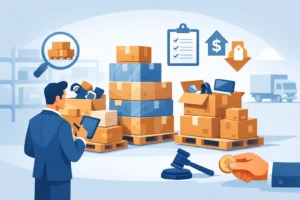
Also ask how mixed the lot really is. Some buyers want broad mixed merchandise. Others want tight category-specific pallets because they know exactly how to sell them. Neither approach is wrong. It depends on whether you are optimizing for speed, specialization, or variety.
Good liquidation buying is not about finding zero-risk inventory. That does not exist. It is about reducing avoidable risk and buying lots that fit your business model.
What New Buyers Usually Get Wrong
The biggest mistake is chasing retail value instead of resale reality. The second is buying outside their lane. The third is ignoring operational work.
Liquidation inventory needs handling. You may need to sort, test, photograph, clean, match pairs, check completeness, and separate salvage from sellable goods. If your business is set up for that, you can create margin that other buyers miss. If you are not set up for it, even a low-cost pallet can become dead stock.
Another common mistake is treating every category the same. Electronics returns require more testing than apparel. Footwear depends heavily on size and brand. General merchandise can spread risk, but it can also slow listing and fulfillment. Better buying comes from matching the lot to your labor capacity and your best sales channels.
The buyers who win in liquidation are usually not the ones who buy the most. They are the ones who buy with discipline, understand condition, control freight, and stay focused on inventory they know how to move.
If you want stronger results, buy your next pallet like a reseller protecting margin, not a shopper chasing a deal. That one shift changes almost everything.
