
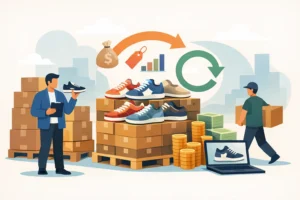
One bad sneaker pallet can tie up your cash fast. One good pallet can stock your store, feed your listings for weeks, and create solid margin across multiple sales channels. That is why learning how to resell sneaker pallets matters – not just how to buy them, but how to sort them, price them, and move them without getting buried in slow inventory.
Sneaker pallets attract resellers for a simple reason. Shoes are a familiar product, branded pairs move faster than random general merchandise, and buyers exist at almost every price point. You can sell premium pairs one by one, bundle value pairs in lots, or move mixed-condition inventory through discount retail, flea markets, and online marketplaces. The upside is real, but the profit is made in the details.
How to resell sneaker pallets without killing your margin
The first mistake most buyers make is shopping only by pallet price. A cheap pallet is not always a profitable pallet. You need to look at condition, manifest quality, brand mix, size spread, and freight cost before you call it a deal.
A pallet loaded with recognizable brands and wearable sizes can outperform a larger, cheaper lot full of damaged returns or hard-to-sell size runs. If the inventory is unmanifested or only partially described, your risk goes up. That does not mean you should avoid it every time. It means you should price that risk into your buy.
Freight matters just as much. A pallet that looks profitable on paper can lose its edge once shipping, handling, and storage are included. Resellers who win consistently know their landed cost, not just their bid price.
Start with the right pallet type
Not all sneaker pallets are built for the same resale model. Overstock and closeout pallets usually give you the cleanest path to higher margins because the merchandise is often new, shelf-ready, and easier to list. Shelf pulls can still be strong, but packaging may show wear. Customer returns offer lower upfront cost, but they require more labor, more testing, and more sorting.
If you are newer to liquidation, start with pallets that reduce guesswork. Clean overstock or shelf-pull sneaker lots usually make more sense than deep return pallets unless you already have a process for grading and moving mixed-condition goods.
Size mix matters too. A pallet full of extreme sizes may be harder to move even if the brands are strong. Balanced size runs usually give you better turnover because you can serve more buyers online and locally.
Know your resale channel before you buy
The best answer to how to resell sneaker pallets depends on where you plan to sell them. If you sell on eBay or similar marketplaces, individual listings with detailed photos and condition notes can pull better margins. If you run a discount store or booth, you may care more about volume and fast turns than maximizing every pair.
Facebook Marketplace and local meetups can work well for bulky inventory because you avoid marketplace fees and shipping hassles. The trade-off is lower reach and more time dealing with messages, no-shows, and price hagglers. Sneaker resale groups and local pop-up events can also move inventory, especially if you have recognizable styles in clean condition.
If your model is online resale, make sure the pallet has enough sellable pairs to justify photographing, listing, storing, and shipping each unit. If your model is local bulk movement, a mixed pallet with a wider range of brands and conditions may still work because your customer is shopping for deals, not perfection.
Build your numbers before the pallet lands
Experienced resellers do not wait until delivery day to figure out whether they can make money. They estimate average sell-through, likely defect rate, and expected sales price before they buy.
A simple framework helps. Start with total landed cost, including the pallet price, freight, supplies, and marketplace fees. Then estimate how many pairs will be top-tier, mid-tier, and low-tier inventory. Some pairs may sell individually for strong margin. Others may need to be bundled, discounted, or cleared locally.
Your profit is rarely based on every pair selling at the best possible price. It usually comes from a blended margin across the whole pallet. That is why realistic pricing beats optimistic pricing every time.
Process the pallet fast
Once the pallet arrives, speed matters. The longer inventory sits unsorted, the slower your cash turns. Open it, inspect it, and separate pairs into workable categories right away.
Most sneaker pallet buyers should create at least four groups: new in box, new without box, used in good condition, and damaged or salvage. This gives you a clear resale path for each pair. New in box pairs can usually command the best pricing. New without box may still sell well if the brand is strong and the photos are clean. Used pairs need honest grading. Damaged pairs may be better as clearance, repair projects, or bulk lots.
Check for missing laces, sole separation, stains, odor, and size label issues. Confirm that pairs actually match. You do not want to build listings around assumptions and then deal with returns later.
Pricing is where most resellers get sloppy
A lot of profit disappears because sellers price everything the same way. Sneaker pallets need segmented pricing. A clean branded pair with original packaging deserves a different strategy than a no-box return with cosmetic flaws.
Look at actual sold prices, not just active listings. Active listings show what sellers want. Sold comps show what buyers paid. Then adjust for condition, size, and speed. If you need cash flow now, price to move. If you have limited competition on a stronger pair, hold for better margin.
This is also where bundle strategy helps. Lower-value pairs can waste time if you list them one by one. Selling them as multi-pair lots to local resellers, flea market vendors, or discount buyers can free up space and recover capital faster.
How to resell sneaker pallets across multiple channels
You do not need one perfect sales channel. You need a system that matches the inventory in front of you. Stronger pairs often belong on online marketplaces where buyers search by brand, model, and size. Mid-tier inventory may do better in local sale groups or discount retail where price drives the purchase. Lower-grade pairs can be bundled and moved wholesale to other resellers.
That channel mix protects your margin. It also reduces the risk of getting stuck with leftovers. One pallet can feed several revenue streams if you treat it like inventory management, not a guessing game.
For many buyers, this is where working with a direct source matters. Companies like Pallet Liquidation Wholesale Online attract resellers because they offer lot sizes for different budgets and a steady path to reorder when a category starts performing.
Mistakes that cost you money
Buying too big, too early is a common one. A truckload mindset on a pallet budget usually ends with cash tied up in inventory you have not learned how to process. Start with a size you can sort, store, and sell efficiently.
Ignoring condition is another expensive mistake. Customer return sneaker pallets can be profitable, but only if you expect variance. Some buyers look at a few good pairs and mentally price the whole load at top value. That is how margins disappear.
Then there is slow listing. Inventory in your garage is not inventory for sale. The faster you grade and post the good pairs, the faster you recover capital and learn what your market actually wants.
What separates winning buyers from one-time buyers
The resellers who stay in this business treat each pallet like a repeatable operation. They track cost per pair, average sale price, return rate, and sell-through speed. They learn which brands move in their market, which sizes sit, and which pallet types fit their business.
They also know that not every pallet needs to be perfect. A profitable pallet can still include dead stock, damaged pairs, or awkward sizes if the overall numbers work. The goal is not to hit a home run on every buy. The goal is to buy with a plan, process fast, and keep cash moving.
If you want to grow with sneaker liquidation, think in cycles. Source smarter, inspect faster, sell in layers, and reinvest based on real results. The more disciplined your system gets, the less you depend on luck and the more you build a resale business that can keep buying, keep listing, and keep turning inventory into profit.
