
When branded running shoes show up at liquidation pricing, serious resellers pay attention fast. That is exactly why pallets Hoka sneakers available through wholesale liquidation keep drawing interest from online sellers, discount store owners, and bulk buyers who want recognizable footwear with resale pull.
Hoka has strong demand because it sits at the intersection of performance, comfort, and brand recognition. Buyers know the name. Customers search for it. That matters when you are trying to move inventory quickly and protect margin. A sneaker pallet with Hoka products can give resellers a better shot at selling through faster than unknown labels, but the right buy still comes down to lot makeup, condition, and total landed cost.
Why pallets Hoka sneakers available get reseller attention
Not every footwear pallet creates the same opportunity. Hoka stands out because the brand already has a built-in market. Runners, healthcare workers, retail workers, and casual buyers all recognize the comfort angle, which widens your resale audience beyond sneaker collectors.
That wider demand changes the economics. A pallet with branded footwear can support stronger listing prices than generic athletic shoes, especially when pairs are clean, current, and in wearable sizes. For resellers, that can mean quicker cash flow, more platform flexibility, and better average returns per pair.
There is also a practical advantage. Footwear is easier to sort, count, and channel than many mixed general merchandise loads. If you buy smart, you can break down a Hoka pallet into eBay listings, local marketplace bundles, in-store inventory, or live selling events without a complicated testing process.
What you are really buying in a Hoka sneaker pallet
A liquidation pallet is not a traditional wholesale reorder. You are usually buying overstock, shelf pulls, closeouts, customer returns, or mixed-condition goods sourced from larger retail channels. That difference matters because resale upside is tied directly to condition and assortment.
Some pallets lean cleaner, with boxed pairs, shelf-pull inventory, or overstock that needs little prep. Others may include customer returns with damaged packaging, tried-on pairs, mismatched boxes, or visible wear. Neither format is automatically bad. It depends on your sales channel and your tolerance for processing.
If you sell online and want high sell-through with fewer headaches, cleaner lots may justify a higher buy-in. If you run a discount store, bin setup, outlet-style operation, or flea market booth, mixed-condition inventory can still produce solid margins because your customer expects value pricing.
This is where experienced buyers separate cost from profit. The cheapest pallet is not always the best pallet. A lower upfront price can still underperform if too many pairs need cleaning, relabeling, or markdowns.
Common lot types you may see
Most reseller-focused footwear liquidation falls into a few categories. Overstock and shelf pulls are usually the most straightforward because they tend to include cleaner merchandise. Customer returns offer lower cost and potentially higher spread, but they take more labor. Mixed lots can combine both, which creates upside if you know how to grade quickly and price by condition.
For newer buyers, starting with one manageable pallet is usually smarter than chasing the biggest discount. A smaller test purchase gives you real data on processing time, average resale value, and how Hoka performs across your channels.
How to evaluate pallets Hoka sneakers available before you buy
The buy decision should be based on resale math, not just brand excitement. First, look at the manifest if one is provided. Check model mix, size spread, quantity, and stated condition. If the pallet is unmanifested, ask what category it falls under and whether it is mostly returns, shelf pulls, or overstock.
Then move to the numbers. Your cost is not just the pallet price. You need to factor in shipping, unloading if required, cleaning labor, replacement boxes if presentation matters, platform fees, and expected loss on unsellable pairs. That gives you your true landed cost.
From there, estimate realistic resale value, not best-case value. If you know one model sells high online but only in certain sizes, do not price the whole pallet as if every pair is premium inventory. Conservative projections protect your business and keep you buying longer.
Another key point is channel fit. A cleaner Hoka lot may perform well on marketplaces where buyers pay for condition and presentation. A rougher lot may still move fast in a discount retail setting where customers care more about brand and comfort than box condition.
Questions serious buyers should ask
Before committing, ask how the goods were sourced, whether the lot is manifested, what condition range to expect, and whether shipping is quoted separately. You should also ask about lot size options if you are trying to scale in stages rather than jump straight into a large purchase.
Responsive support matters here. In liquidation, speed is important, but blind buying is expensive. A dependable supplier should help you understand what you are purchasing so you can match the lot to your business model.
Best resale channels for Hoka liquidation inventory
Hoka sneakers are flexible inventory, which is one reason they stay attractive to resellers. Online marketplaces can work well for individual pair listings, especially when size, condition, and photos are strong. Local platforms can move pairs quickly with no shipping hassle. Discount stores and outlet-style setups can clear volume fast when pricing is aggressive.
The right channel depends on your margin goal and labor capacity. Selling pair by pair online often brings better gross revenue, but it takes more time for inspection, photography, listing, packing, and returns management. Selling locally or through a storefront may lower per-pair revenue, but it can reduce labor and help you turn inventory faster.
Some buyers use a blended model. They pull out the best pairs for online sale, move mid-tier inventory locally, and bundle lower-grade pairs for quick clearance. That approach usually gives the most control, but it requires discipline and organization.
Why branded footwear pallets can help you scale
If you are trying to grow beyond one-off flips, branded sneaker liquidation offers a practical path. Recognizable footwear creates repeatable demand. You are not convincing customers to try an unknown product. You are offering a known brand at a lower price point, and that is a much easier sales conversation.
It also helps with inventory planning. Once you understand your average sell-through rate on a category like Hoka, you can start buying with more confidence. That means better cash flow management, more consistent restocking, and fewer random sourcing gaps.
For stores and larger resellers, pallets also make operational sense. Bulk buying lowers your per-unit cost compared with piecing together small lots from scattered sources. It gives you more inventory to list, more product to display, and more chances to create margin from one inbound shipment.
What can hurt profit on a Hoka pallet
Brand alone does not eliminate risk. Condition issues, incomplete pairs, heavy size imbalances, and inflated freight costs can cut deeply into profit if you do not account for them upfront. Customer returns can be especially tricky if your team is not set up to inspect and grade efficiently.
There is also market timing. Some models move faster than others, and some sizes sit longer. If your cash is tight, slow-moving inventory can create pressure even when the eventual resale value looks decent on paper.
That is why a direct, reseller-focused sourcing approach matters. You want inventory options that match your budget and your level of experience, whether you need a starter pallet or larger volume. Pallet Liquidation Wholesale Online positions around that need by giving buyers access to bulk merchandise formats built for resale, not retail browsing.
When pallets Hoka sneakers available make the most sense
These pallets make the most sense when you already know your channel, understand your target price range, and have a plan for processing. If your business needs inventory that customers recognize and you want room for markup, branded footwear is a strong category.
They are also a solid fit for resellers who want to step up from random thrift sourcing or clearance hunting into more scalable buying. Instead of chasing one pair at a time, you can source volume, standardize your process, and build a more reliable inventory pipeline.
If you are brand new, start with realistic expectations. Buy what you can process and sell within a reasonable time frame. Learn how condition affects your pricing. Track every cost. The goal is not just to buy cheap. The goal is to buy inventory you can actually turn for profit.
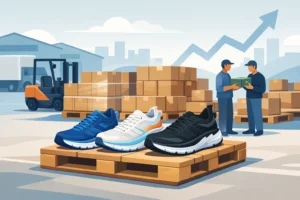
The buyers who do best with liquidation are not guessing. They know what they can sell, what condition they can handle, and what margin they need before they ever place the order. That is the right way to approach Hoka pallets too. When the lot is right, the numbers work, and the demand is already there, branded sneaker liquidation can become a very practical growth move.
