
Margins disappear fast when a discount store fills up with the wrong pallets. Cheap inventory is not the same as profitable inventory, and the best liquidation inventory for discount stores is the merchandise that turns quickly, fits your local customer base, and leaves enough room for markup after freight, sorting, and shrink.
If you run a discount store, the goal is simple – buy low, move volume, and keep fresh product hitting the floor. That means choosing liquidation categories with consistent demand, manageable risk, and enough variety to keep bargain shoppers coming back. Some loads are great for traffic but weak on margin. Others can produce stronger profits but need more labor to test, sort, or repackage. The right mix depends on how your store sells and how much work your team can handle.
What makes the best liquidation inventory for discount stores?
The best inventory for a discount store usually checks four boxes. It has broad customer appeal, a clear value gap versus regular retail, a resale price that still feels like a deal, and a condition level your staff can realistically process.
That is why overstock, shelf pulls, closeouts, and select customer returns stay in demand with store owners. They give you access to branded or recognizable goods at below-retail cost without forcing you into a full salvage model. If your store depends on walk-in traffic, mixed lots also matter because they create the treasure-hunt effect shoppers expect from discount retail.
Still, not every category performs the same way. A pallet that works for an online reseller may sit too long in a storefront. A high-ticket load may look exciting, but if your average customer wants practical everyday items under a certain price point, your cash gets tied up on the sales floor.
The strongest liquidation categories for discount stores
Overstock inventory
Overstock is usually the cleanest play for discount stores. These are excess goods that did not sell through normal retail channels, but they are often new, shelf-ready, and easier to price. For store owners who want less sorting and fewer customer complaints, overstock can be one of the safest ways to buy liquidation.
It works especially well in everyday categories like home goods, apparel basics, small kitchen items, seasonal merchandise, tools, and packaged general merchandise. Customers understand the value fast, and your staff does not need to spend hours testing every unit before it hits the floor.
The trade-off is that cleaner inventory usually costs more per unit than rougher loads. Your percentage margin may be lower on paper, but your real margin can be better because labor, damage, and returns are lower.
Shelf pulls
Shelf pulls are another strong option when you want recognizable retail product without paying new wholesale pricing. These items have been displayed in stores and pulled from shelves, often because of packaging wear, season changes, resets, or discontinued SKUs.
For discount stores, shelf pulls can be excellent because customers are already shopping for value. A dented box or sticker residue usually does not kill a sale if the item is priced right. In many cases, shelf pulls give you a better-looking sales floor than mixed returns while keeping costs controlled.
The key is inspection. Some shelf-pull loads are close to new. Others include missing pieces, opened packaging, or store wear that needs markdowns. Ask the right questions before you buy, and do not price shelf pulls like untouched retail product.
Closeouts
Closeouts are built for fast retail. These are discontinued items, end-of-line goods, packaging changes, or retailer exit inventory. When the product is still useful and branded, closeouts can deliver strong turns because shoppers feel they are getting a one-time deal.
This category is especially effective for discount stores that rely on weekly changes and promotional tables. Closeouts create urgency. Customers know that when it is gone, it is gone.
The downside is replenishment. If a closeout item sells well, you may not be able to get the same SKU again. That makes closeouts great for traffic and short-term margin, but not always ideal if you need stable repeat inventory in a specific product line.
Customer returns
Returns can be profitable, but they are not automatically the best liquidation inventory for discount stores unless your operation is built to handle them. Returns often come with the lowest landed cost, which creates big upside. They also come with the highest condition risk.
If your team can test electronics, inspect small appliances, sort apparel, or rebuild mixed lots into floor-ready merchandise, returns can create serious value. If not, the labor can eat your margin fast. For many discount stores, the smartest move is not avoiding returns completely – it is buying them selectively and keeping them to categories your staff can process efficiently.
Footwear and sneaker pallets
Footwear is one of the most attractive liquidation categories when the lot quality is right. Shoes move across multiple buyer types, from family shoppers to fashion buyers to resale customers looking for branded pairs below mall pricing. Sneaker pallets can be especially strong because recognized brands create instant interest on the sales floor.
For a discount store, footwear works best when sizing is mixed but balanced, condition is clearly stated, and branding is visible enough to support fast purchase decisions. The strongest loads include pairs that can be sold quickly without heavy cleaning or repair.
This is also a category where direct-source buying matters. A supplier that regularly handles footwear liquidation is more likely to offer better lot consistency and clearer expectations on condition.
How to match liquidation inventory to your store model
A neighborhood discount store, a bin store, and a small chain do not buy the same way. If your business depends on low labor and clean presentation, lean heavier on overstock and shelf pulls. If your store thrives on bargain hunting and volume pricing, mixed general merchandise and select returns can make more sense.
Think about your average ticket, your customer income range, and how often shoppers expect new inventory. A store selling mostly necessities should prioritize practical, replenishable categories. A store built around impulse buying can take more chances on closeouts, novelty, and mixed lots.
Space matters too. Bulky loads can look cheap on paper, but they tie up floor space and backroom capacity. Small, high-turn items often produce better sales per square foot.
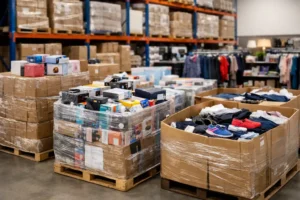
What to watch before you buy
The biggest mistake discount store buyers make is chasing cost per pallet instead of cost per sellable unit. A cheap load with heavy damage, incomplete items, or poor category mix can become expensive fast.
Before you commit, look at inventory type, condition, manifested versus unmanifested format, average retail value, freight cost, and how much labor is required to make the goods ready for sale. Ask yourself how fast the merchandise can hit the floor and how many pieces will likely need markdowns.
Manifested lots can help if you want tighter control over categories and pricing. Unmanifested mixed pallets can create better surprise value, but they also increase uncertainty. Neither format is automatically better. It depends on your risk tolerance and your team.
Supplier consistency is just as important as pallet price. A reliable liquidation source gives you a clearer picture of the merchandise type, buying format, and shipping process. That helps you buy with more confidence and plan inventory turns instead of gambling on every order.
Best buying strategy for steady margins
Most successful discount stores do not rely on one inventory type. They build a mix. Cleaner overstock and shelf pulls keep the sales floor presentable and reduce complaints. Closeouts bring urgency and variety. Select returns add margin where the store has the labor to process them. Footwear and branded merchandise create spikes in traffic when the deal is right.
Start with categories your store already sells well. Expand only after you understand your sell-through rate, your markdown pattern, and your true processing cost. Buying bigger does not always mean making more. Better lot selection usually beats more volume, especially when cash flow is tight.
For newer buyers, smaller lots can be the smarter move because they let you test categories without overcommitting. For established operators, pallets and truckloads can lower your unit cost and support multiple locations or higher-volume floor turns. That is one reason many resellers and store owners work with suppliers like Pallet Liquidation Wholesale Online – flexible lot sizes make it easier to match inventory to budget and growth stage.
Discount retail rewards buyers who stay disciplined. The best liquidation inventory is not the flashiest load or the cheapest truck. It is the merchandise that your customers recognize, your team can process, and your store can sell through without getting stuck. Buy with your margin in mind, but buy with your floor in mind too.
