
A truckload can change your resale business fast. It can also tie up cash, warehouse space, and labor if you buy the wrong merchandise. If you are figuring out how to buy wholesale truckloads, the real goal is not just getting volume. It is buying inventory you can actually move, at a cost that leaves room for freight, sorting, losses, and profit.
For most resellers, truckloads make sense when pallets are no longer enough. You need more consistent inventory, better cost per unit, and enough product to feed multiple sales channels. That could mean a discount store, flea market booths, online listings, sneaker resale, or a mix of all of them. The upside is real, but so is the risk, so the buying process needs to be disciplined.
When buying wholesale truckloads actually makes sense
A truckload is not automatically the cheapest or smartest move just because the unit count is bigger. It works best when you already know what categories sell for you, how quickly you can turn inventory, and what your average recovery rate looks like. If you are still testing product categories, boxes or pallets usually give you more flexibility.
Truckloads are a better fit when you have the cash flow to hold inventory, the staff to process it, and a place to receive it. They are also a strong option when you want to lower your cost per item and source at a level that supports serious resale volume. Buyers who do well with truckloads usually treat them like an inventory system, not a gamble.
How to buy wholesale truckloads without guessing
The first step is choosing the right merchandise type. Not all liquidation inventory behaves the same way. Overstock and closeouts usually offer cleaner, easier-to-list goods with lower processing time. Shelf pulls can still be profitable, but packaging may show wear. Customer returns can have high upside, especially in branded categories, but they also bring more testing, sorting, and write-offs.
That is why category matters as much as condition. A truckload of footwear, apparel, small home goods, tools, electronics, or general merchandise can each perform very differently depending on your sales channel. Footwear and sneakers often attract strong reseller demand because size runs, brand recognition, and year-round movement can support faster flips. General merchandise may look attractive on volume, but mixed loads can require more labor and slower listing work.
The next step is reviewing the lot details closely. If a manifest is available, study it. Look for item counts, brand mix, condition notes, MSRP, and category spread. A manifest is not a guarantee of resale value, but it gives you a basis for evaluating the load. If the truckload is unmanifested, that does not make it a bad buy, but it does mean your margin should justify the extra risk.
Ask direct questions before you purchase. Is the load overstock, returns, shelf pulls, or mixed? Is it single-category or mixed merchandise? How many pallets are included? Are the brands consistent or broad? Has the load been screened, sorted, or untouched? Strong suppliers should be able to explain what you are buying in plain terms.
Understand the real cost before you commit
New buyers often focus on the truckload price and ignore the rest. That is where deals go bad. Your true landed cost includes the inventory price, freight, unloading, warehouse handling, labor, disposal, and the time it takes to process product into sellable condition.
Freight matters more than many buyers expect. A good truckload price can become average once shipping is added, especially if the load is traveling across the country. You also need to know whether you need a dock, liftgate service, an appointment window, or extra receiving support. Small operational details can turn into real costs fast.
Then there is recovery rate. If you pay aggressively for branded merchandise but only a portion of the units are clean, complete, and easy to sell, your margins tighten fast. Smart truckload buyers run basic numbers before they buy. They estimate how many units will sell at strong margin, how many will need discounting, and how many may end up as salvage or donation.
What to check before the truck arrives
Buying the load is only half the job. If your receiving process is weak, profit leaks out before you ever list an item. Make sure you know where the truck will unload, who will check it in, and how you will separate merchandise by condition, category, or sales channel.
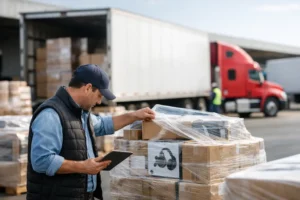
If you sell across marketplaces, plan your workflow in advance. Some items should go straight to fast local sale. Others belong on eBay, Amazon, Facebook Marketplace, Whatnot, or in-store. A truckload with strong branded merchandise can create real upside, but only if your business can process volume without getting buried in unsorted inventory.
You should also have a plan for problem goods. Returns and mixed loads often include incomplete sets, damaged packaging, or lower-value items that are not worth individual listing. Those units still need a strategy. That might mean bundling, clearance pricing, bin-store style sales, or secondary liquidation.
Choosing the right supplier matters more than chasing the lowest price
There is no shortage of truckload offers online. The issue is consistency. A supplier that gives clear lot descriptions, realistic condition expectations, and straightforward shipping support is usually worth more than a seller advertising the absolute cheapest deal.
This is especially true if you plan to buy repeatedly. One profitable truckload is good. A dependable source of inventory is better. Repeat buyers need supply they can build around, not random opportunities that change quality every time.
Look for a supplier that understands resale economics, not just bulk liquidation. You want accurate communication, available support, and enough lot variety to match your budget and business model. Some buyers need footwear truckloads, others want mixed general merchandise, and others are better off scaling from boxes to pallets before moving into full loads. Flexibility matters because your inventory plan should fit your cash flow, not break it.
Common mistakes that kill margin
The biggest mistake is buying outside your lane. A truckload may look like a bargain, but if the category does not match your buyers, your money can sit in inventory for months. Fast-moving merchandise at a decent margin usually beats higher theoretical margin on products you struggle to sell.
Another mistake is overestimating resale price. Branded goods help, but brand name alone does not guarantee demand. Condition, seasonality, size assortment, and market saturation all affect what you can actually get. Footwear may resell well, for example, but sizing gaps or heavy style duplication can still slow turns.
Some buyers also underestimate labor. Truckloads create work. Sorting, testing, cleaning, photographing, bundling, and listing all take time. If your operation is lean, a more predictable overstock load may outperform a cheaper returns load simply because it moves through your system faster.
A smart way to scale into truckload buying
If you are not fully ready for a truckload, that is not a reason to force it. The better move is often scaling in stages. Start with boxes or pallets in the categories you already understand. Track your sell-through, average recovery, and processing time. Once those numbers are solid, moving into truckloads becomes a business decision instead of a guess.
That staged approach also helps you identify what kind of truckload you should buy first. Some businesses need cleaner branded overstock. Others can handle mixed returns because they have labor and multiple outlets for every grade of inventory. It depends on your operation, your market, and how quickly you need cash back out of the load.
For resellers who are ready to buy bigger, working with a direct liquidation source like Pallet Liquidation Wholesale Online can make the process easier. You get access to discounted merchandise in multiple lot sizes, including truckloads, with categories built for resale and shipping coordination designed for business buyers who need inventory moving.
Final thought on how to buy wholesale truckloads
The best truckload buyers are not the ones who buy the most inventory. They are the ones who know exactly what they can sell, what they can process, and what margin they need before the truck ever leaves the dock. Buy with that mindset, and a truckload stops being a risk-heavy bulk purchase and starts becoming a serious growth move for your resale business.
