
One pallet can look like a steal on paper and still turn into dead inventory if you buy the wrong mix. That is why resellers keep asking, are customer return pallets worth buying? The short answer is yes, they can be, but only when the pricing, category, condition, and resale plan all line up.
Customer returns sit in a different lane than overstock or shelf pulls. You are not just buying discounted merchandise. You are buying inventory that has already been in a customer’s hands, which means the upside can be strong, but the risk is real. For a reseller focused on margin, that trade-off matters more than the headline discount.
Are customer return pallets worth buying for resellers?
For many resellers, customer return pallets are worth buying because they offer access to branded goods at a low cost per unit. If even a portion of the pallet contains clean, resale-ready items, the numbers can work fast. That is especially true for sellers who know how to test, sort, repackage, bundle, or part out inventory.
The catch is simple. Returns are not uniform. Some products come back unopened. Others are lightly used. Some are missing pieces, damaged in transit, or returned for reasons that have nothing to do with function. You are buying opportunity, not certainty.
That is why return pallets tend to reward buyers who operate like business owners, not gamblers. If you know your selling channels, understand your costs, and can move mixed-condition inventory, returns can produce healthy margins. If you expect every unit to be retail-perfect, this category will frustrate you.
Why customer return pallets can be profitable
The biggest advantage is entry cost. Return pallets are usually priced far below original retail, which gives resellers room to absorb defects and still make money. That margin cushion is the entire game. You are not betting that every item is perfect. You are buying low enough that the working units carry the lot.
Brand recognition also helps. Merchandise tied to known retailers and popular categories usually moves faster than generic inventory. Buyers on eBay, Facebook Marketplace, flea markets, and discount stores are often willing to purchase open-box, tested, or cosmetically imperfect items if the price is right.
Another reason these pallets work is inventory variety. A mixed pallet can give a small reseller multiple SKUs without placing separate orders across several suppliers. That can help you fill shelves, test categories, and turn cash faster. For newer buyers with limited capital, the ability to source volume in one purchase has real value.
There is also upside in secondary selling strategies. Some items can be sold as-is. Some can be refurbished. Some can be broken into parts or accessories. Others can be bundled with similar units to create a more marketable offer. Experienced liquidation buyers understand that profit often comes from how the pallet is processed after arrival, not just what is inside it.
Where buyers go wrong
Most bad return pallet purchases come from one of three mistakes. The first is buying based on retail value alone. A manifest may show a high MSRP, but retail value does not equal resale value. A returned coffee maker with missing pieces is not worth full retail to your buyer, no matter what the original shelf tag said.
The second mistake is ignoring condition mix. Not all customer returns are equal. A pallet with a large percentage of salvage-grade goods can eat your margin quickly through testing time, disposal costs, and unsellable units. If you do not know the grade or the likely condition profile, you are buying blind.
The third mistake is underestimating labor. Returns take work. You may need to inspect, clean, test, sort, photograph, relist, or repackage items before they are ready to sell. That is manageable if your operation is built for it. It is a problem if you need fast, plug-and-play inventory.
What makes a return pallet worth buying
A good return pallet starts with the category. Some categories are easier to resell and less risky than others. Footwear, apparel, small home goods, tools, and certain electronics accessories often give resellers more flexibility than highly technical products with hidden defects. If you already know how a category moves in your market, your odds improve.
The next factor is buy cost relative to realistic recovery value. Smart buyers estimate what they can actually recover from the pallet, not what the original retailer charged. They assume a percentage will be unsellable, another percentage will need markdowns, and only some units will sell near top resale range. If the deal still works after those adjustments, the pallet is worth serious attention.
Supplier transparency matters too. Clear descriptions, accurate manifests when available, known inventory types, and straightforward support reduce unnecessary risk. In liquidation, nobody can promise perfection on returns, but a reliable supplier can give buyers enough information to make an informed decision.
Shipping should not be treated as an afterthought. A pallet that looks cheap can become expensive once freight is added. That matters even more for lower-ticket merchandise. Buyers should always calculate landed cost, not just pallet price, before deciding whether the lot makes sense.
When customer return pallets make the most sense
Customer return pallets fit best when you have a resale system for mixed-condition goods. That could mean a discount store, swap meet booth, local warehouse sale model, or online marketplace strategy where condition can be clearly disclosed. The more flexible your selling channels, the easier it is to monetize the full pallet.
They also make sense when you can buy at the right size for your budget. Not every reseller needs to jump into truckloads. Smaller pallet purchases or box lots can be the better move when you are testing a supplier, learning a category, or protecting cash flow. One of the advantages of working with a direct liquidation source is being able to scale inventory based on what your business can realistically process.
Returns are especially attractive for buyers who understand niche demand. Sneaker resellers, discount apparel sellers, and merchants working in home goods often know exactly how to spot recoverable value that less experienced buyers miss. If you know which flaws your customers will accept and which ones kill a sale, you can price more accurately and buy more aggressively.
When they are not worth it
If your business depends on like-new inventory with minimal prep, customer return pallets may not be your best fit. Overstock and shelf pulls are usually cleaner options for sellers who want faster listing, fewer complaints, and less sorting.
They are also a poor fit if you lack storage space or labor. A mixed return pallet can create a mess fast if your workflow is not ready for intake, testing, and separation. Inventory that sits unsorted is money tied up on the floor.
Another red flag is buying outside your category knowledge. A pallet of returned electronics may look exciting, but if you do not know how to test them, source missing accessories, or handle returns on your own sales channels, that pallet can turn into a costly lesson.
How to evaluate a pallet before you buy
Start with the category and ask yourself one hard question: where will this inventory actually sell? If you cannot answer that clearly, stop there. A cheap pallet with no resale path is not a deal.
Next, estimate recovery by condition tier. Think in terms of best units, average units, and likely non-sellers. Build in markdowns. Build in fees. Build in freight. If you sell online, account for platform charges, packaging, and potential buyer issues. If you sell locally, account for time and lower price expectations.
Then look at operational fit. Can you process it quickly? Can you test or clean it? Do you have a local buyer base for open-box or used-condition goods? The best liquidation buys are not just profitable on paper. They fit your business model.
If you are buying from a supplier like Pallet Liquidation Wholesale Online, the smart move is to match lot size and category to your current capacity, not your biggest ambition. Scale after you prove your numbers.
The real answer on return pallet value
So, are customer return pallets worth buying? For resellers who understand margin, accept some risk, and know how to move mixed inventory, yes, absolutely. They can be one of the better ways to buy branded merchandise below retail and create room for profit.
But worth buying does not mean worth buying blindly. The pallet has to match your market, your labor capacity, your freight math, and your sales strategy. Returns reward disciplined buyers who know how to recover value from imperfect inventory.
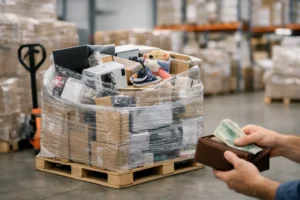
If you approach customer return pallets with realistic expectations and a clear resale plan, they stop being a gamble and start becoming inventory with upside.
