
A sneaker pallet can look like easy profit until the first box opens and half the pairs are missing insoles, lids, or mates. That is why a sneaker pallet quality review checklist matters before you spend on bulk inventory. If you resell footwear, your margin is made at the buying stage, not after the pallet lands.
Sneakers move fast when the mix is right. They also stall fast when the lot is heavy on damaged returns, weak sizes, or brands with no local demand. A solid review process helps you separate real opportunity from expensive guesswork.
Why a sneaker pallet quality review checklist protects profit
In liquidation, small condition details change resale value in a big way. A clean shelf-pull pair in a good size run can move online or in-store with very little prep. A customer-return pair with heel drag, odor, or a missing box might still sell, but the pricing drops and the labor goes up.
That is the real issue for resellers. It is not only about whether the pallet is cheap. It is about whether the inventory gives you enough room for shipping, cleaning, relisting, storage, and markdowns if some pairs sit longer than expected.
A quality review checklist keeps you focused on resale math. It forces you to ask the right questions about grade, quantity, brand mix, defects, and sell-through before you commit cash.
Start with the lot type before you review the shoes
Not every sneaker pallet is built the same. Overstock, shelf pulls, customer returns, closeouts, and mixed liquidation lots all come with different risk levels.
Overstock and closeout pallets usually offer the cleanest path to resale because the merchandise is often unused and more consistent. Shelf pulls can also be strong, but packaging wear is common. Customer returns can bring bigger discounts and bigger upside, yet they need tighter inspection because condition swings from like-new to unsellable.
This is where many buyers get too optimistic. They see a low price and assume all branded sneakers will move. But a low purchase price does not fix high defect rates. If the lot type suggests heavier sorting, testing, cleaning, or pairing work, your review should be stricter.
Sneaker Pallet Quality Review Checklist
Check the grade and condition language
Read the manifest or lot description carefully. Terms like new, shelf pull, returned, mixed condition, untested, or salvage are not interchangeable. They tell you how much repair and pricing pressure to expect.
If a pallet is listed as mixed condition, assume you will get a blend of clean pairs, worn returns, damaged packaging, and a few low-value pieces. That does not mean pass on it. It means buy it only if the discount covers the sorting risk.
Review brand strength, not just brand names
A pallet loaded with recognizable labels sounds great, but brand alone does not guarantee sales. Some brands have strong movement only in certain models, sizes, or regions. Others sell well at discount stores but sit online because competition is too high.
Look for a mix you can actually move through your channels. If you sell on marketplaces, check whether the pallet leans toward styles with proven demand. If you run a local store or flea market booth, practical everyday sneakers may outperform trend pairs.
Sneaker Pallet Quality Review Checklist
Size mix can quietly make or break a pallet. A lot packed with extreme sizes may look valuable on paper but move slowly in the real world. Balanced runs in common men’s, women’s, and kids’ sizes usually create faster turnover.
This is one of the easiest things to miss when buyers focus only on pair count. Forty pairs sounds strong until you realize most are sizes that take months to sell. A pallet with a better size spread can produce faster cash flow even if the top-end brands are fewer.
Confirm pair integrity
Every reseller should ask the same blunt question: are the shoes complete and correctly matched? In liquidation footwear, mismatched sizes, missing mates, swapped pairs, and missing laces happen more often than new buyers expect.
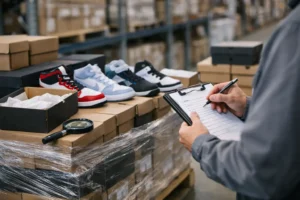
A pair that cannot be sold as a pair is usually dead inventory or parts value. The same goes for shoes with missing insoles or heavy internal wear that is not obvious in exterior photos. If pair integrity is uncertain, build that risk into your bid or purchase target.
Sneaker Pallet Quality Review Checklist
Boxed sneakers usually sell easier, especially online. Original packaging supports buyer confidence, cleaner listings, and stronger resale pricing. Damaged boxes are not always a deal killer, but they do chip away at value.
For discount store operators or flea market sellers, box damage may matter less. For online resale, collector-driven categories, and gift buyers, it matters more. Your checklist should reflect where you sell, not just what you buy.
Watch for wear patterns and repair costs
Returned sneakers often need more than a quick wipe-down. Check for outsole wear, heel drag, toe creasing, sole separation, odor, stains, or peeling materials. Cosmetic flaws can be manageable. Structural flaws usually eat margin.
Cleaning labor is part of cost. So are replacement laces, missing insoles, adhesive fixes, and repackaging. A pallet with many minor issues can still work, but only if the numbers leave room for prep time.
Compare manifest detail against real transparency
A detailed manifest helps, but not all manifests are equal. Some are SKU-rich and clear. Others are broad summaries with limited condition detail. The less detail you have, the more conservative you should be.
Look for realistic pair counts, category breakdowns, and condition notes that match the lot type. If the description is too vague, do not fill in the blanks with best-case assumptions.
Sneaker Pallet Quality Review Checklist
Lot photos are not just marketing. They are part of the review. Zoom in on soles, midsoles, toe boxes, collars, and box stacks. If the photos only show top-down views or shrink-wrapped pallets from a distance, you are not seeing the condition story.
Clear photos of multiple pairs, assorted angles, and actual pallet contents signal stronger transparency. Limited photos do not always mean a bad lot, but they do mean more uncertainty. More uncertainty should lead to tighter buying discipline.
Build your buy price from resale reality
A good sneaker pallet quality review checklist should end with one hard number: your maximum buy price. That number should come from expected resale value after defects, not from excitement over retail comparisons.
Start with realistic average selling prices by condition tier. Then subtract platform fees, freight, labor, cleaning, storage, packaging loss, and a cushion for dead stock. What is left is your margin room. If the pallet price pushes too close to your floor, move on.
This is where experienced buyers separate themselves. They do not buy because the pallet looks branded. They buy because the spread between landed cost and resale value is wide enough to survive mistakes.
When a mixed sneaker pallet is still worth it
Not every winning pallet is clean and uniform. Mixed pallets can be strong buys when the discount is deep, the brand mix is broad, and your sales channels are flexible. If you can split inventory across eBay, Facebook Marketplace, local retail, and bundle sales, you can often recover value from pairs that would not work in a single-channel model.
The trade-off is time. Mixed pallets demand sorting, testing, grading, and sharper pricing. If your operation is small and cash flow matters more than squeezing every dollar out of every pair, cleaner lots may be the smarter play.
A faster review process for repeat buyers
Once you buy regularly, your checklist should become a filter, not a chore. You want to know five things fast: what condition bucket the pallet fits, how strong the brands are, whether sizes are sellable, how many pairs are likely complete, and whether the final landed cost leaves enough margin.
That is the mindset behind Pallet Liquidation Wholesale Online and similar direct-source buying strategies. The goal is not just to get inventory cheap. The goal is to buy inventory you can move.
A sneaker pallet is only a deal if the quality supports the resale plan. Stay disciplined, review every lot like the profit is already on the line, and let the checklist make the decision before emotion does.
