
You do not need the biggest lot to make money. You need the right lot for your budget, sales speed, storage space, and resale plan. That is the real question behind box lots versus pallet lots, and it matters more than most new buyers realize when they start sourcing liquidation inventory.
Some resellers jump into pallets too early because the unit cost looks better. Others stay with boxes too long and cap their profit because they are buying too little volume. The smart move is not guessing. It is matching the lot size to how your business actually operates.
Box lots versus pallet lots: what is the difference?
A box lot is a smaller wholesale liquidation unit packed by the box. It is usually built for buyers who want lower upfront cost, easier handling, and a simpler entry point into resale. A pallet lot is a larger inventory unit stacked on a pallet, often with more items, more variety, and better cost per piece when bought correctly.
That basic difference changes everything from shipping and storage to testing new categories and managing returns. If you sell part-time, run a smaller operation, or want to move carefully, box lots often make sense. If you already know your market, need more inventory, or want to scale faster, pallet lots usually give you more buying power.
Neither format is automatically better. Profit comes from fit.
When box lots make more sense
Box lots are often the smarter buy for newer resellers and cautious buyers. The first reason is simple: lower commitment. You can enter a category without tying up too much cash in one purchase. If you are testing footwear, apparel, small electronics, housewares, or general merchandise, a box lot gives you room to learn without overextending.
They are also easier to receive and sort. Not every buyer has a loading dock, warehouse crew, or dedicated storage unit. A few boxes can be unloaded, inspected, and listed quickly. That matters if you run your business from home, sell at flea markets, or manage inventory in a small retail space.
There is also less exposure if the lot is more mixed than expected. In liquidation, there is always some level of variability depending on the inventory type, whether it is overstock, shelf pulls, customer returns, or closeouts. With a box lot, the downside is usually easier to absorb.
For marketplace sellers, box lots can be a faster operational fit. You can process a smaller lot, identify winners, list them across channels, and recover capital faster. If your model depends on steady cash flow instead of large inventory holds, that speed matters for Box Lots Versus Pallet Lots
When pallet lots are the stronger move
Pallet lots are built for volume. If you already know what sells for you, buying by the pallet can improve margins because your landed cost per unit is often lower than it would be in smaller formats. That is one of the main reasons experienced resellers move up from Box Lots Versus Pallet Lots.
Pallet lots also make more sense when you have the channels to move inventory consistently. If you sell through a store, multiple online platforms, live sales, wholesale accounts, or local discount outlets, you need enough merchandise to stay stocked. Running out of inventory costs money too.
Another advantage is scale. One solid pallet can give you enough product depth to build repeat listings, create bundled offers, stock seasonal demand, or spread your sales across different channels. Buyers who work with branded goods, including footwear and sneakers, often prefer pallets because the volume creates more room for profit if they know how to sort and move mixed lots.
The trade-off is obvious. Pallet lots require more capital, more storage, and more discipline. If your processing system is weak, a larger lot can sit too long. Inventory that does not get listed does not generate margin.
Box lots versus pallet lots for profit margins
A lot of buyers focus only on purchase price. That is a mistake. Real margin comes from total cost and sell-through rate, not just what the lot costs on paper.
Box lots often have a higher cost per unit, but they can still produce strong returns because they turn faster and require less overhead. If you can inspect, list, and sell the inventory quickly, the higher unit cost may be worth it. Fast cash rotation can beat a cheaper pallet that sits for weeks.
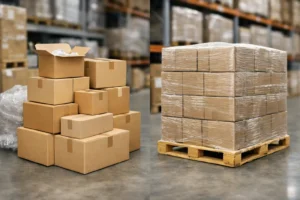
Pallet lots usually win on cost per item, especially for buyers who understand freight, prep, storage, and resale channels. But the lower unit price only helps if you can move the volume. If half the pallet stays unsold or takes too long to process, your margin gets squeezed.
This is where honest math matters. A smaller lot with quicker recovery can outperform a larger lot with better theoretical margin. The best buyers look at expected sell-through, average resale value, labor time, shipping costs, and storage costs before choosing lot size.
Risk, condition, and category matter
Not all liquidation inventory behaves the same way. Box lots versus pallet lots is not just about size. It is also about risk tolerance.
If you are buying customer returns, especially in categories with condition issues or testing needs, a box lot may be the safer play. Smaller volume gives you more control while you learn what defects, missing parts, or grading patterns to expect. You can adjust your buying strategy before stepping into larger lots.
For cleaner categories such as overstock, shelf pulls, or closeouts, pallet lots may be more attractive because the condition profile is often easier to work with at volume. If the merchandise is recognizable and demand is strong, pallets can help you build inventory faster with less guesswork.
Category matters too. Footwear is a good example. A mixed sneaker or shoe pallet can be a strong opportunity for resellers who already know sizing, brand demand, and local or online sell-through. But if you are new to footwear liquidation, starting with a box lot can help you understand how that category performs before you scale.
How to choose the right lot size for your business
The best buying decision usually comes down to four questions. Box Lots Versus Pallet Lots, How much capital can you tie up without hurting cash flow? How quickly can you process and list the inventory? How much space do you actually have? And where will the goods be sold?
If your cash is tight, your storage is limited, or your sales channels are still developing, box lots are usually the better move. They let you buy, learn, and reinvest without creating pressure you do not need.
If you already have buyers, proven listings, warehouse space, or a store that needs inventory regularly, pallet lots are often the better value. They give you more volume and better scaling potential. Box Lots Versus Pallet Lots
There is also a middle-ground strategy that many serious resellers use. Start with box lots in a category, learn the demand, track sell-through, and then move into pallet lots once the numbers support it. That approach lowers mistakes and builds confidence with real data instead of hope.
Operational costs buyers overlook
Freight is one of the biggest differences between these formats. Box lots can often be easier and cheaper to receive, especially for buyers without commercial delivery access. Pallet lots may require freight coordination, unloading planning, and more room at delivery.
Labor is another factor. A pallet may offer better buying value, but it also takes more time to sort, inspect, clean, test, photograph, and list. If you are doing all of that yourself, time becomes part of your cost.
Then there is storage. Boxes can fit into tighter spaces and move through your workflow faster. Pallets need room, and they can create clutter fast if your processing system is not organized. That issue gets expensive when good inventory is buried under inventory that has not been touched.
These are not small details. They directly affect your net return. Box Lots Versus Pallet Lots
What smart resellers do before they buy
Experienced buyers do not choose lot size based on excitement. They choose based on sales capacity. They know their average order value, their fastest-moving categories, and how long inventory can sit before it becomes a problem.
They also buy with an exit plan. A box lot may be split across eBay, Facebook Marketplace, and a weekend market. A pallet lot may be divided into premium items for online resale and lower-ticket units for local bulk deals. The stronger the plan, the easier it is to choose the right format.
At Pallet Liquidation Wholesale Online, that is why flexible lot sizes matter. Not every buyer needs a full pallet on day one, and not every business should stay small if the demand is there.
A good liquidation buy is not about buying the most inventory. It is about buying inventory you can turn into revenue without slowing your business down. Choose the format that keeps your cash moving, your margins realistic, and your next purchase within reach.
