
A lot of buyers look at a sneaker pallet and see one number – the pallet cost. A better buyer sees three numbers: buy cost, recovery rate, and time to sell. That is what this sneaker pallet resale case study is really about. Not hype, not best-case screenshots, but what a reseller can reasonably expect when buying liquidation sneakers to flip for profit.
This example follows a small reseller who bought one mixed sneaker pallet to sell across eBay, Facebook Marketplace, local meetups, and a discount booth. The goal was simple: move branded footwear fast enough to protect cash flow while still keeping enough margin to make the pallet worth the work. The results were solid, but they only worked because the buyer treated the pallet like inventory, not a lottery ticket.
Sneaker pallet resale case study: the starting numbers
The pallet in this case was a mixed branded sneaker lot with customer returns, shelf pulls, and overstock blended together. The reseller paid $2,350 for the pallet and $375 in freight, putting total landed cost at $2,725. The manifest was partial, not perfect, which is common in liquidation. Some pairs were listed by size and brand, while others were grouped by category.
The shipment contained 96 pairs. On paper, that brought the average landed cost to about $28.39 per pair. That number looked attractive at first glance, especially since several pairs carried original retail tags from $60 to $110. But retail tag value is not resale value, and in liquidation that gap matters.
When the pallet arrived, the buyer sorted the sneakers into four groups. There were 34 pairs in clean overstock or shelf-pull condition, 28 pairs with box damage or minor cosmetic issues, 22 customer-return pairs that needed cleaning or retagging, and 12 pairs that were either incomplete, heavily worn, or too slow-moving to list at strong prices. That mix changed the whole resale plan.
What sold fast and what dragged
The fastest sellers were recognizable athletic styles in common men’s sizes. Pairs in sizes 9 through 11 moved first, especially neutral colors and everyday performance shoes. Those did not require much storytelling. Good photos, accurate condition notes, and competitive pricing were enough.
The slower inventory fell into two categories. First were fashion-forward colorways with less local demand. Second were pairs with condition issues that pushed them into a lower price bracket. A damaged box does not kill a sale online, but visible wear, missing insoles, or replacement laces can cut demand quickly unless the discount is obvious.
That is one of the big lessons from any sneaker pallet resale case study. Brand matters, but condition and size curve often matter more. A mid-tier sneaker in a clean, common size can outperform a better-known style with flaws.
Revenue breakdown by channel
The reseller did not depend on one marketplace. That decision protected margin for Sneaker Pallet Resale
eBay handled 41 pairs and generated $2,746 in gross revenue. It also carried the highest friction because marketplace fees and shipping supplies cut into every sale. Still, eBay was the best place for styles that needed national exposure or buyer search traffic.
Facebook Marketplace and local meetups moved 27 pairs for $1,485. Those sales were lower per pair on average, but there were no platform fees and almost no shipping costs. Cash turnover was faster. For a reseller trying to recycle capital into the next load, that mattered.
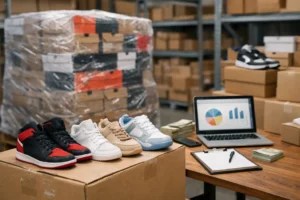
A local discount booth sold 19 pairs for $760, for Sneaker Pallet Resale These were mostly lower-ticket pairs with cosmetic issues, damaged boxes, or slower brand appeal. The booth was not glamorous, but it turned dead stock into cash.
The final 9 pairs were bundled in small lots and sold to another reseller for $225. This was below ideal margin, but it cleared out leftovers that were tying up space and time.
Total gross revenue came to $5,216.
The real profit after expenses
Gross revenue is not profit. This is where newer buyers often fool themselves.
After the $2,725 landed cost, the reseller still had operating expenses. Marketplace fees came to roughly $356. Shipping supplies, cleaning products, replacement boxes, and label materials added another $118. The discount booth charged $95 in space-related costs during the sell-through period. Gas and local meetup time were not calculated as hard costs, but they still affected labor.
Total hard expenses reached $3,294.
Net profit landed at $1,922.
On a percentage basis, that was about a 58 percent return on total cost. For one pallet, that is a strong result. But the more useful number was the sell-through timeline. It took 7 weeks to move the majority of pairs and 11 weeks to fully clear the pallet. If the same capital had been tied up for five months, the deal would have looked a lot weaker.
Why this pallet worked , Sneaker Pallet Resale
The buyer made money because the pallet had enough recoverable pairs in clean condition to carry the lot. The 34 best pairs and the 28 lightly flawed pairs produced most of the profit. The lower-end and damaged pairs did not destroy the deal because the average buy cost stayed low enough to absorb them.
Channel strategy also mattered. If every pair had been forced onto eBay, fees and returns would have reduced profit. If every pair had been pushed locally, the stronger styles would have been underpriced. The mixed-channel approach let the buyer match inventory quality to the right selling method.
There was also discipline in pricing. The reseller did not hold out for top-dollar on every pair. Fast-moving SKUs were priced to sell within days, not months. That kept cash circulating and reduced storage drag.
Where the risk showed up for Sneaker Pallet Resale
This was a profitable pallet, but it was not clean money. About 18 percent of the pairs underperformed expectations. Some needed more prep time than expected. A few listed brands turned out to be weaker movers in certain sizes. Two customer-return pairs were unsellable individually and had to be absorbed into bundle pricing.
Freight was another pressure point. At $375, shipping was manageable. If the same pallet had cost $550 to move, the per-pair economics would have tightened fast. Buyers in remote delivery zones or with liftgate requirements need to account for that before they buy.
The other risk was labor. Sorting 96 pairs, checking sizes, inspecting flaws, cleaning, photographing, listing, storing, answering messages, packing, and meeting buyers took real time. Resellers who ignore labor usually overestimate profit. This business rewards speed, but only if your process is organized.
What this case says about buying sneaker pallets now
The takeaway from this sneaker pallet resale case study is not that every pallet returns 58 percent. It is that margin comes from buying right, grading honestly, and selling through multiple outlets. One good pallet does not guarantee the next one will the same way. Mixed liquidation always carries variance.
For entry-level buyers, a smaller footwear lot or a lower-count pallet may be the better first move. It limits exposure while you learn your local demand and preferred sales channels. For experienced resellers, full sneaker pallets make more sense when you already have listing systems, storage space, and a plan for B-grade inventory.
It also helps to buy from a supplier that understands reseller economics and moves inventory in formats that fit different budgets. That is why many buyers look for direct liquidation sources instead of chasing random one-off deals. Consistency is worth money.
How to read the numbers before you buy
If you are evaluating your own pallet opportunity, do not start with claimed retail value. Start with recoverable resale value. Estimate what clean pairs can sell for, then discount flawed pairs aggressively. Add freight to your cost before you calculate margin. Assume some percentage will be slower, lower, or unsellable than expected.
A simple rule helps. If the pallet only works under best-case pricing, it is probably too expensive. The stronger buy is the pallet that still leaves room after fees, shipping, condition surprises, and a few weak pairs. That is where wholesale liquidation becomes a business instead of a gamble.
For resellers who want branded footwear with room for markup, sneaker pallets can absolutely work. But the winners are usually not the buyers chasing fantasy margins. They are the ones who know their numbers, move inventory quickly, and buy with enough cushion to handle what shows up on the truck.
The smart move is not finding a perfect pallet. It is finding one with enough margin to survive reality and still leave you profit when the last pair finally sells.
