
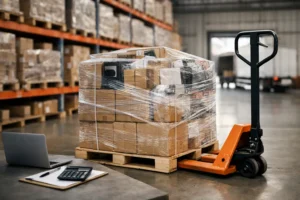
A pallet that looks cheap on the product page can get expensive fast once freight hits the invoice. That is why liquidation pallet shipping cost matters just as much as the merchandise itself. If you are buying to resell, your real profit starts after inventory cost, freight, handling, and sell-through are all accounted for.
Most new buyers focus on retail value, brand names, or the number of units in the load. Experienced resellers look at landed cost first. A great pallet at the wrong shipping rate can crush margin. A decent pallet with efficient freight can turn faster and leave more room for profit.
What liquidation pallet shipping cost really includes
Liquidation pallet shipping cost is not just a flat delivery fee. In most cases, it is a mix of freight pricing, pallet size, total weight, destination type, and access requirements. If the shipment is going to a commercial location with a dock or forklift, the rate is usually lower. If it is going to a house, apartment, storage unit, or location that needs liftgate service, the cost usually goes up.
The carrier is pricing risk, labor, distance, and space on the truck. A pallet of shoes, mixed general merchandise, or customer returns may all ship differently depending on density and packaging. Two pallets with the same footprint can carry very different freight costs if one is taller, heavier, or harder to handle.
For resellers, this is the part that matters most: shipping is part of your inventory acquisition cost. If you buy a pallet for $500 and freight is $250, your starting cost is not $500. It is $750 before you list a single item.
The biggest factors that affect liquidation pallet shipping cost
Distance and shipping lane
Freight rates are heavily tied to origin and destination. A pallet moving a few states away will usually cost less than one crossing the country. Some shipping lanes are also more efficient than others. Carriers price busy routes differently from rural or low-volume lanes.
This is why two buyers can pay very different rates for the same pallet. One buyer may be close to the warehouse. Another may be several zones away and need extra handling before final delivery.
Commercial vs residential Liquidation Pallet Shipping delivery
This is one of the biggest price swings in liquidation freight. Commercial addresses with standard receiving hours are usually cheaper. Residential delivery often includes extra fees because the truck, driver, and unload process take more time.
If you are serious about buying pallets regularly, it may make sense to receive shipments at a business address, shared warehouse, or commercial space. That one move can reduce repeat shipping costs over time.
Liftgate and limited access fees for Liquidation Pallet Shipping
If your location does not have a dock or forklift, you may need liftgate service. That means the carrier needs to lower the pallet from the truck to the ground. It sounds minor, but it adds cost.
The same goes for limited access locations such as storage units, schools, farms, churches, construction sites, or certain downtown buildings. Carriers often charge more because delivery is slower and less predictable.
Pallet size, weight, and freight class for Liquidation Pallet Shipping
Large, heavy pallets cost more to move. That part is simple. But freight also depends on density and class. A compact pallet packed tightly may ship more efficiently than one that is oversized, loose, or awkwardly stacked.
In liquidation, pallet contents vary. Footwear pallets can be easier to stack and wrap cleanly than mixed returns with uneven boxes and fragile items. Better packaging can help reduce damage risk and keep freight more predictable.
Number of pallets ordered
Buying one pallet usually carries a higher per-pallet freight cost than buying several at once. That is because fixed pickup and route costs get spread across more inventory. For buyers scaling up, this is where truckload and multi-pallet orders start making more sense.
If you have the capital and sales channel to move product, combining orders can improve your landed cost. That does not mean bigger is always better. It means the freight math often improves with volume.
How resellers should calculate real margin
A lot of buyers make the same mistake. They compare pallet price to estimated resale value and stop there. That is not enough. The right way to look at a deal is by total landed cost and realistic recovery.
Start with the pallet price. Add shipping. Add any marketplace fees, prep costs, storage, labor, supplies, and expected loss from damaged or low-value items. Then compare that number to what you can realistically sell through in your channel.
If a pallet costs $600 and shipping adds $225, your base cost is $825. If you expect to spend another $75 on processing and selling, you are really at $900. If your likely resale recovery is $1,400, the deal may still work. If your recovery is only $1,050, your margin is thin and one bad batch can wipe it out.
This is why liquidation pallet shipping cost should be reviewed before checkout, not after delivery.
How to keep liquidation pallet shipping cost under control
The cheapest freight is not always the best freight, but there are smart ways to protect margin.
First, ship to a commercial address whenever possible. That alone can cut down extra fees. Second, ask for accurate pallet dimensions and estimated weight before you buy. You want clear numbers, not guesses. Third, consider ordering multiple pallets if your budget and demand support it. Freight usually gets more efficient when you spread it across more units.
It also helps to buy inventory that matches your operation. If you sell footwear, apparel, or other fast-moving categories with easy handling, you may get better packaging efficiency and fewer delivery problems than with fragile mixed electronics or oversized home goods. Predictable inventory is easier to receive, sort, and resell.
Timing matters too. If you wait until you urgently need inventory, you are more likely to overpay for both product and freight. Buyers who plan ahead can compare options, combine shipments, and make cleaner purchasing decisions.
When a higher shipping cost still makes sense
Not every expensive freight quote is bad. Sometimes paying more for shipping is still the right move if the merchandise has stronger resale demand, better brand recognition, or faster turnover.
A pallet of branded sneakers or footwear with solid resale channels can absorb more freight than a low-demand mixed lot. The reason is simple: good inventory moves. If your product turns quickly and your recovery rate is strong, the higher delivery cost may still leave room for profit.
The opposite is also true. A pallet with a low upfront price can be a weak deal if shipping is high and the merchandise is slow-moving. Cheap inventory is not automatically profitable inventory.
That is where working with a supplier that understands reseller economics makes a difference. You want clear lot information, realistic shipping coordination, and inventory formats that match how you actually sell.
Questions to ask before you place the order
Before committing to any pallet, ask what the freight quote includes. Does it cover residential service, liftgate, and appointment delivery if needed? Are there any re-delivery or missed appointment fees? Is the pallet fully wrapped and ready for standard LTL freight?
You should also ask for the shipping origin, estimated transit time, and whether multiple pallets can be combined. If you are buying for a store, warehouse, flea market operation, or online resale business, those details affect planning just as much as price.
Serious buyers do not just ask what the pallet costs. They ask what it costs to get that pallet on the floor and ready to sell.
Why freight transparency matters when buying liquidation
In liquidation, speed matters, but clarity matters more. Freight surprises create margin problems, customer service issues, and receiving delays. A supplier that gives clear shipping details helps you make faster, better buying decisions.
That is especially important for newer buyers who are still learning how to price risk. It is also important for experienced resellers trying to scale without wasting cash on avoidable freight charges. Pallet Liquidation Wholesale Online serves buyers who care about direct access, flexible lot sizes, and getting inventory moved quickly, but the smart move is always the same: know your full cost before you buy.
The best pallet deals are not just discounted. They are shippable, receivable, and profitable after the truck leaves.
