One pallet can look like a goldmine in photos and turn into a break-even deal once you sort the boxes. That is why wholesale return pallets explained in plain English matters for resellers. If you buy liquidation inventory to flip for profit, you need to know what return pallets are, what is actually inside them, and where the real margin gets made or lost.
What wholesale return pallets really are
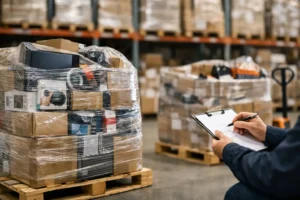
Wholesale return pallets are bulk lots of merchandise made up of items customers sent back to retailers. These returns get grouped, sorted to some level, and sold off in volume instead of going back onto a standard retail shelf. For resellers, that creates an opportunity to buy branded goods at far below original retail.
The key point is that a return pallet is not the same as overstock, shelf pulls, or closeout inventory. Overstock is usually unsold merchandise. Shelf pulls may be new but removed from a store floor because of packaging wear, season changes, or reset cycles. Customer returns are different because the item has already been in a buyer’s hands. That creates more upside on price, but it also adds more risk.
Some pallets are mixed across categories like home goods, small electronics, apparel, toys, and accessories. Others are more targeted, such as footwear pallets or sneaker returns. The more specific the category, the easier it usually is to estimate resale channels and average recovery value.
Wholesale return pallets explained by condition
Condition is where most new buyers get tripped up. Wholesale Return Pallets Explained Clearly. A pallet labeled as customer returns does not mean every item is damaged, and it does not mean every item is resale-ready either. In most lots, you will see a mix.
Some items are unopened and simply changed their mind purchases. Some have damaged packaging but a perfectly sellable product inside. Others may be used, missing parts, tested and working, or untested. Then there are the units that are only good for parts, bundling, or liquidation at a very low price point.
This is why grading matters. Suppliers may use terms like uninspected returns, manifested returns, mixed condition, salvage, or tested. Those labels give you a starting point, not a guarantee. Uninspected means the pallet has not been fully checked item by item. Wholesale Return Pallets Explained Clearly, manifested means there is a listed breakdown of expected products, though actual condition still varies. Salvage usually means a higher percentage of damaged or incomplete merchandise.
For experienced resellers, mixed condition can still be highly profitable because they know how to sort, test, bundle, and move inventory through multiple channels. For beginners, it is usually smarter to start with smaller lots or more predictable categories.
Why resellers buy return pallets
The reason is simple. Margin.
If you can buy recognized merchandise for a fraction of retail, sort it efficiently, and resell the best units through the right channels, the numbers can work fast. Return pallets also let buyers scale inventory without paying standard wholesale pricing on every unit. That matters if you run a discount store, sell online, work flea markets, or move product through local pickup listings.
There is also a speed advantage. Instead of sourcing one item at a time, you can secure dozens or hundreds of units in one purchase. For buyers trying to keep shelves stocked or maintain listing volume online, that bulk access is a major advantage.
Wholesale Return Pallets Explained Clearly, that said, cheap inventory is not automatically profitable inventory. The gap between cost and resale value only matters if the goods are sortable, listable, and worth the labor.
What you can expect inside a return pallet
It depends on the supplier, retailer source, and category. A general merchandise return pallet may contain a wide spread of products with inconsistent demand. A footwear return pallet is often easier to process because sizing, brand recognition, and resale comps are easier to estimate.
In many lots, you should expect a percentage of items to be ready to sell after light inspection. Another percentage may need cleaning, repackaging, testing, or matching with missing components. A smaller portion may be dead inventory unless you break it down for parts, sell it in bundles, or discount it heavily.
Photos and manifests help, but they do not remove all uncertainty. Freight, handling, and your own labor also affect the final landed cost. Smart buyers calculate all of it before they commit.
How to evaluate a pallet before buying
Start with the category. Ask yourself whether you already know how to sell those products. If you have experience moving shoes, apparel, or small home goods, stay in your lane first. Buying random electronics because the retail value looks high is a fast way to tie up cash in returns you cannot test or move.Wholesale Return Pallets Explained Clearly
Next, look at the pallet format. Is it manifested or unmanifested? Is it a single category or mixed? Is it customer returns only, or blended with shelf pulls and overstock? The more mixed the lot, the more your outcome depends on sorting skill.
Then check the numbers. You want to estimate your possible recovery, not just admire the original MSRP. Retail value can make a pallet sound stronger than it is. What matters is your realistic resale value after defects, missing parts, platform fees, shipping supplies, labor, and expected losses.
You also need to think about freight. A good pallet price can turn average once shipping is added. For larger buyers, truckload economics may improve the per-unit cost. For smaller buyers, box lots or single pallets can be a safer way to test a supplier and a category before going bigger.
The biggest risks buyers should understand
Returns come with uncertainty. That is the trade-off for discounted pricing.
The first risk is condition variance. Two similar-looking pallets can perform very differently. The second is hidden cost. Testing, cleaning, relabeling, storage, and disposal all chip away at margin. The third is channel mismatch. A pallet may contain good merchandise, but if it does not fit your sales channels, the money gets stuck in inventory.
There is also the issue of expectations. Some buyers expect every pallet to contain easy flips. That is not how liquidation works. Profitable resellers usually build their edge by buying consistently, understanding category behavior, and knowing how to recover value from mixed outcomes.
How to buy smarter, not just cheaper
The best return pallet buyers are disciplined. They do not chase every deal. They buy what they can process and sell.
If you are newer to liquidation, start with categories you understand and lot sizes that fit your cash flow. A smaller buy with clean execution beats a larger buy that overwhelms your budget, space, or labor. If you are more experienced, you can often handle higher-risk pallets because you already have repair contacts, secondary outlets, and a better read on what low-grade inventory can still produce.
Work with suppliers that clearly explain lot types, grading language, and shipping terms. That transparency matters. A direct liquidation source with flexible buying options gives you more control over risk, especially if you want to test pallets, move into larger volume, or focus on categories like footwear where demand can stay strong across multiple resale channels.
Who wholesale return pallets make sense for
They make sense for resellers who are comfortable with imperfect inventory and focused on margin. If you sell on eBay, Facebook Marketplace, flea markets, discount retail, or local storefronts, return pallets can give you enough product variety to keep inventory moving. They also fit buyers who know how to separate premium units from lower-grade stock and match each one to the right outlet.
They are less ideal for buyers who need every item to be uniform, retail-ready, and immediately listable. If your business depends on pristine packaging and low-touch fulfillment, customer returns may not be your best first move. In that case, overstock or shelf pulls may be a better fit.
A practical way to think about profit
Do not judge a pallet by how many items are perfect. Judge it by total recovery.
A profitable pallet often includes a mix of strong units, average units, and weak units. The strong items drive margin. The average items recover cost. The weak items test your process. If you can move all three efficiently, return pallets can become a repeatable sourcing strategy instead of a gamble.
That is where experienced buyers separate themselves. They understand that liquidation profit is not just in buying low. It is in sorting fast, pricing accurately, and moving product without letting inventory sit.
At Pallet Liquidation Wholesale Online, that is exactly why buyers look for direct access to box lots, pallets, and truckloads that match their budget and resale model.
If you are considering your first return pallet, keep it simple. Buy a category you understand, run the real numbers, and treat the first load like market research you can profit from. The best pallet is not the one with the biggest claimed retail value. It is the one you can turn into cash with the least guesswork.