
Margins disappear fast when you buy the wrong pallet. The best products for pallet flipping are the ones with steady demand, recognizable brands, manageable return risk, and resale channels that fit how you sell. If you are buying inventory to move on eBay, Facebook Marketplace, flea markets, discount stores, or local resale networks, product choice matters more than hype.
Some categories look exciting because the retail value is high, but they can be slow, fragile, seasonal, or loaded with untested returns. Other categories move quietly and consistently, which is usually where resellers make repeat money. The goal is not just to buy cheap. The goal is to buy inventory you can turn into cash without getting buried in sorting, testing, or dead stock.
What makes the best products for pallet flipping?
The best pallet categories usually have four things working in your favor. First, they have broad demand. Second, they are easy to identify and price. Third, shipping or handling does not eat your margin. Fourth, the condition profile makes sense for your business.
That last point matters. Overstock and shelf pulls usually give newer buyers a cleaner path because the merchandise is often easier to inspect, list, and sell. Customer returns can bring stronger upside, but they also bring more labor, more uncertainty, and more loss if you do not know how to grade and process inventory.
If you sell online, size, weight, and defect rate matter a lot. If you sell locally, bulky items can work better because you avoid shipping costs. If you run a discount store or bin store, mixed general merchandise can be a strong fit because you can move volume even when individual item values vary.
1. Footwear pallets
Footwear remains one of the strongest categories for pallet flipping because demand stays consistent across seasons, price points, and selling channels. Athletic shoes, sneakers, casual shoes, work boots, and kids’ footwear all have active resale markets. Branded pairs are especially attractive because buyers already know the value.
This category works well for resellers who understand sizing, model identification, and condition grading. A clean overstock or shelf-pull shoe pallet can produce fast listings and solid margins. Returns can still be profitable, but you need to watch for missing insoles, damaged boxes, mismatched pairs, or visible wear.
For many buyers, footwear is the sweet spot between strong resale value and manageable shipping. It is also one of the easier categories to split across channels. Better pairs can go online, while lower-priced or flawed pairs can move in local markets or discount racks.
2. Apparel pallets
Clothing pallets are popular because the buy-in can be affordable and the inventory is easy to store. Basics like jeans, jackets, activewear, kids’ clothing, and branded casual wear tend to perform better than highly trend-driven pieces. Apparel gives you room to sort by brand, season, size run, and condition.
The trade-off is volume. Clothing takes time to process, and resale prices can vary widely depending on brand recognition and presentation. If you have a system for steaming, folding, measuring, and bundling, apparel can be a reliable category. If you want quick turns without much handling, it may feel labor-heavy.
Shelf pulls and overstock usually make more sense here than heavy return loads. Missing tags, minor makeup marks, or hanger impressions are usually easier to work around than major defects.
3. Small home goods
Home goods are one of the most practical categories for steady flipping. Kitchen tools, storage products, bedding, small decor, bath accessories, and everyday household items all have broad demand. These products are not always flashy, but they sell because people use them.
This category works especially well for flea market sellers, discount stores, and online resellers who want lower average selling prices with regular movement. Brand helps, but function matters just as much. A mixed pallet of useful household items can outperform trend-based categories simply because the customer base is bigger.
The caution here is breakage. Fragile items can turn a good-looking pallet into a margin problem. Check manifests and condition notes when available, and be realistic about how much damaged product you can absorb.
4. Tools and hardware
Tools are strong pallet-flip products because buyers understand the value quickly. Hand tools, small power tools, hardware assortments, jobsite accessories, and garage-related merchandise have consistent appeal with homeowners, contractors, and local buyers.
This category can produce good average ticket prices, especially when brands are recognizable. It also works across multiple channels. Individual tools can be sold online, while mixed lots and open-box items often move well locally.
The trade-off is testing. Customer return tool pallets can be profitable, but only if you have time to inspect batteries, chargers, motors, and completeness. For many resellers, overstock or shelf-pull tools are the safer play.
5. Health and beauty products
Health and beauty pallets can move fast because the products are consumable and repeatable. Items like skincare, haircare, cosmetics, personal care tools, and grooming products have strong demand, especially when brands are recognized.
This category is not for every buyer. Expiration dates, seals, packaging condition, and marketplace restrictions all matter. If you know where and how you will sell before you buy, beauty can be a fast-moving category. If not, it can turn into inventory you cannot list or should not sell.
The better play is usually shelf pulls or closeouts with clean packaging and clear dating. Be cautious with damaged, opened, or heavily handled customer returns.
6. Toys and baby products
Toys can generate strong seasonal spikes, but they also sell year-round if the brands and age ranges are right. Baby products can be profitable too, especially feeding accessories, soft goods, and smaller essentials.
Demand is real, but condition standards are higher. Missing parts, damaged packaging, or safety concerns can kill resale value fast. This is a category where manifests and supplier transparency matter a lot. Newer buyers should focus on cleaner inventory grades rather than gambling on deep-return loads.
When sourced well, toys do well in local resale, online marketplaces, and discount retail. Timing matters more here than in some other categories, especially around holidays.
7. Consumer electronics accessories
Accessories are often a better pallet-flipping play than core electronics. Phone cases, chargers, headphones, cables, gaming accessories, and small smart-device add-ons can sell fast without the same testing burden as laptops or TVs.
That is the key difference. Full electronics can offer big upside, but they also bring higher failure rates, more returns, and more buyer complaints. Accessories are easier to sort, easier to bundle, and often cheaper to ship. They may not look glamorous, but they can produce cleaner turnover.
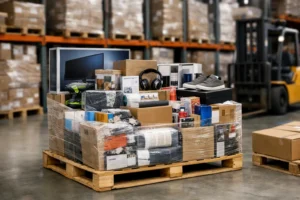
If you do buy electronics pallets, know your risk tolerance. Untested electronics can be profitable for experienced buyers, but they are not the easiest place to start.
8. Seasonal merchandise
Seasonal inventory can be excellent for pallet flipping if you buy at the right time and sell with enough runway. Holiday decor, outdoor summer items, back-to-school goods, and winter accessories can move quickly when demand peaks.
The upside is obvious – buyers shop these items with urgency. The downside is timing. Miss the season, and your inventory may sit for months or require deeper markdowns. Seasonal pallets work best for resellers who plan ahead and have storage.
9. General merchandise pallets
Mixed general merchandise pallets are often the entry point for new buyers because they offer variety and lower cost per unit. You may get household items, apparel, accessories, toys, light electronics, and more in one load.
This format can work well for bin stores, live sellers, auction resellers, and flea market vendors because the mix lets you reach different customers at different price points. The challenge is consistency. General merchandise can produce surprise winners, but it also creates more sorting work and less predictable margins.
If your business depends on repeatability, category-specific pallets are usually stronger. If your business thrives on volume and variety, general merchandise can be a smart buy.
How to choose the best products for pallet flipping for your model
The best category depends on how you sell. If you are an online reseller, footwear, apparel, and accessories are usually easier to ship and list. If you sell locally, tools, home goods, and mixed merchandise can move well without freight or parcel costs cutting into your profit.
Your budget matters too. Smaller buyers often do better starting with cleaner, narrower categories where pricing is easier. Larger buyers can spread risk across mixed lots, truckloads, or multiple categories. There is no trophy for buying the most complicated pallet. Smart money starts where processing is simple and demand is proven.
It also pays to buy from a supplier that gives you lot options that match your capital and experience. A business built around direct liquidation access, flexible quantities, and categories with real resale demand gives you a better shot at repeat wins. That is why many resellers focus on proven inventory types like footwear, apparel, home goods, and branded mixed lots instead of chasing random high-retail-value loads.
The categories that look good but can go wrong
Large furniture, oversized exercise equipment, and fragile decor can all look profitable on paper. In reality, storage, damage, shipping, and slower buyer demand can make them harder to flip. High-end electronics can do the same thing if the testing burden is too high or the failure rate is worse than expected.
That does not mean these categories are bad. It means they are better for buyers with the right setup. If you have repair capabilities, a local pickup model, or a store built for bulky inventory, your answer may be different.
The best pallet flips usually come from categories you can process quickly, price confidently, and sell through your existing channels without extra complexity. Start there, learn the patterns, and scale into higher-risk loads when your operation can handle them.
A good pallet is not just cheap inventory. It is inventory that fits your resale system, protects your margin, and gets turned into cash fast.
