
If you’re buying pallets to make money, product choice matters more than hype. The top products to buy by pallet are the ones that move fast, leave room for margin after freight and sorting, and fit the sales channels you already know how to work.
A cheap pallet is not automatically a good pallet. Resellers get stuck when they chase low cost instead of resale demand. The better play is to buy categories with steady buyers, recognizable brands, and enough variety to spread risk across multiple items. That is what keeps cash flow moving.
What makes the top products to buy by pallet
The best pallet categories usually share a few traits. They have broad demand, resale-friendly price points, and enough item familiarity that buyers know what they are looking at. You do not want inventory that needs a long education process to sell.
Margins also need to survive the real costs. That means freight, labor, testing, cleaning, repackaging, and marketplace fees. A pallet can look profitable on paper and still disappoint once you account for damaged units, missing parts, and slower sellers. That is why smart buyers focus on categories with multiple exit options, not just one platform.
Footwear and sneaker pallets
Footwear is one of the strongest categories in liquidation because demand stays consistent across seasons, price points, and selling channels. Sneaker pallets are especially attractive when they include branded inventory that can be sold online, in stores, at flea markets, or through local networks.
Shoes also give resellers room to segment inventory. New pairs in box can go to higher-ticket platforms. Shelf pulls and overstock can move through discount retail or social selling. Customer returns take more work, but the upside can still be solid if the buy cost is low enough and the condition is manageable.
The trade-off is sizing. A pallet with too many fringe sizes can slow turnover, and mixed-condition loads require time to inspect. Still, branded footwear remains one of the top products to buy by pallet because it combines strong consumer demand with flexible resale options.
Apparel with broad everyday demand
Clothing pallets can work very well when the mix is practical. Basics tend to outperform trend-driven pieces because they sell year-round and appeal to a bigger audience. Think jeans, activewear, jackets, kids’ clothing, socks, and branded casualwear rather than niche fashion that depends on perfect timing.
Apparel gives buyers a lot of units for the money, which is useful if your business model depends on volume. It also works well for bin stores, discount shops, live sales, and online marketplaces. If the load is heavy on customer returns, expect more sorting and a higher percentage of unsellable pieces. If it is shelf pulls or overstock, the resale path is usually smoother.
The real key is brand recognition and condition consistency. Random fashion assortments can tie up capital. Everyday branded apparel usually moves much faster.
Health and beauty products
Health and beauty pallets can produce quick turnover because many items are low-ticket, easy to understand, and bought repeatedly by consumers. Cosmetics, skincare, hair care, personal care, and packaged beauty accessories often perform well when the product is clean, current, and clearly labeled.
This category rewards attention to detail. Expiration dates, packaging damage, seals, and compliance issues matter. Some marketplaces also restrict certain beauty products, so buyers need to know their selling channel before they buy. When the lot is clean and the items are from recognizable brands, health and beauty can be a strong category for bundling, impulse sales, and repeat customer demand.
Small home goods and kitchen items
Home goods are one of the safest pallet categories for many resellers because demand is wide and the product range is easy to move. Kitchen gadgets, cookware, storage items, bedding, bath accessories, decor, and cleaning tools tend to appeal to both online and in-person buyers.
This category works because consumers always need practical household items. You are not waiting on a trend to create demand. Small home goods are also easier to bundle into sets, which helps increase average order value. Overstock and shelf pulls are often the sweet spot here because buyers can avoid the testing burden that comes with electronics.
The downside is that some items are bulky relative to resale price. Freight math matters. A pallet of lightweight, useful, branded home products usually beats a pallet full of oversized low-value goods.
Tools and hardware
Tools are a strong resale category because they attract buyers who care more about utility than packaging. Hand tools, accessories, shop gear, home repair items, and certain power tools can perform very well, especially when brands are known and the items are easy to check.
This category does best with buyers who understand condition grading. New overstock can move fast and command good prices. Returns can still be profitable, but testing becomes part of the job. Missing batteries, attachments, or chargers can change the resale value quickly.
For local resale, tools are especially effective because buyers often want them immediately and do not mind minor packaging wear. That gives resellers another path to move inventory without relying only on major marketplaces.
Consumer electronics and accessories
Electronics get attention because the upside can be high, but they are not automatically the best choice for every buyer. Accessories like headphones, chargers, small speakers, keyboards, phone cases, and other plug-and-play items are often a better pallet play than high-risk electronics that require deep testing.
The reason is simple. Accessories are easier to sort, easier to list, and usually carry lower failure rates than more complex devices. Laptops, tablets, gaming systems, and other major electronics can still be profitable, but the buyer needs experience, parts access, and a clear process for grading and troubleshooting.
If you are newer to liquidation, start with categories that have lower technical risk. If you already have testing capacity, electronics can become one of your strongest margin drivers.
Toys and seasonal merchandise
Toys can move quickly when timing is right. Holiday periods, birthdays, and gift seasons create natural demand, and branded toys are easier to sell than obscure items. Seasonal pallets in general can be profitable because they ride predictable buying waves.
The catch is timing. Seasonal inventory loses momentum once the moment passes. That means buyers need to act fast, price aggressively, and avoid overcommitting. Toys also need condition checks for completeness and packaging quality, especially if you plan to sell online.
When purchased at the right cost, toys and seasonal goods can bring fast flips. They are less forgiving if you miss the selling window.
Baby products with practical use
Baby items often sell well because parents buy out of need, not just want. Feeding accessories, baby care items, soft goods, and everyday essentials can have solid resale demand if they are clean, safe, and from trusted brands.
This category needs caution. Safety standards matter, and not every item is worth the liability. Practical, non-complex products are usually a better fit than anything requiring strict inspection or missing components. When sourced carefully, baby products can be dependable inventory because there is always a market for essentials.
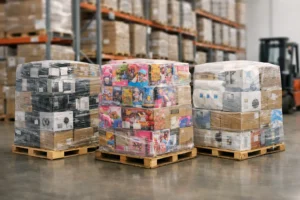
How to choose the right pallet for your business
The best category depends on your selling method. If you run a local discount store, mixed home goods and apparel may outperform fragile categories. If you sell online and know how to grade shoes, sneaker pallets may give you better margins. If you need fast cash flow, consumable-friendly health and beauty loads may turn faster than bulky hard goods.
Capital matters too. Smaller buyers should avoid pallets that require specialized labor, heavy testing, or expensive storage. Experienced bulk buyers can take on more risk because they have systems for sorting, staffing, and freight. There is no single best pallet category for everyone. There is a best category for your channel, budget, and speed to market.
One practical way to reduce mistakes is to stay close to what you already understand. If you know footwear pricing, buy more footwear. If your customers respond to home goods, do not chase electronics just because the headline numbers look bigger. Familiar categories usually produce better decisions.
Buy for resale reality, not just retail fantasy
A pallet does not need every unit to be perfect. It needs enough sellable inventory at the right spread of values to make the deal work. That is why the top products to buy by pallet are not always the flashiest categories. They are the categories with repeat demand, recognizable brands, manageable risk, and multiple ways to sell through.
For many resellers, that means starting with footwear, apparel, home goods, beauty, tools, and selective electronics accessories. Those categories give you room to move inventory, recover costs, and build buying confidence. If you can source directly, move fast, and stay disciplined on condition and freight, pallet buying stops feeling like a gamble and starts looking like a real inventory strategy.
The smartest pallet buyers do not ask what sounds exciting. They ask what will still be selling next week, next month, and after the freight bill hits.
